
3.1 Introduction
Writing in 1974, Willey looked back at his work in the Virú Valley, Peru, in the 1940s, during which the archaeological and anthropological study, the Virú Valley Program (the results summarized in Willey 1953) had adopted new approaches to the analysis of landscapes. He said that the project “wanted to ‘recover’ more of the past, to understand it better, to explain it; but just how we were going to do this was not explicit” (1974c, p.156). In 1970 J.N. Hill had expressed a similar concern: “archaeologists have been interested in making sociological inferences and a number of scholars have decried the paucity of such efforts . . . The problem is that we have not known how to go about it.” For several decades archaeological theory has debated what sort of versions of the past can be recovered. Archaeology has been the recipient of many ideas sourced from other disciplines, and has sometimes struggled to incorporate them seamlessly into archaeological practice. Most books on archaeological theory present archaeology as a mosaic of ideas derived from more established and more information-rich areas of endeavour (Bintliff and Pearce 2011; Dark 2013; Hill 1970, p.12; Hodder 2001; Johnson 2010; Lucas 2001; Ridges 2006, p.146; Trigger 1996; Willey 1974c). Ridges is concerned that that “the diversity of perspectives now applied in archaeology potentially presents a problem for interpretation” (Ridges 2006, p.146). My own approach to organizing and interpreting archaeological data is derived from an approach used in development economics, but it is not entirely unlike earlier models that were developed for use in archaeology. The Sustainable Rural Livelihood approach explicitly includes all aspects of human activity. The SRL model has much in common with the ecological and economic analysis of the systems-focused archaeologies that emerged as a result of or in tandem with the New Archaeology. However, it also emphasises social influences and the importance of personal utility, so it overlaps considerably with many of the goals of post-processual archaeology.
The SRL approach was explained in Chapter 2, but here I situate it within the context of related archaeological theoretical approaches to see how it complements them, and in which ways it differs. Although my own approach to organizing and interpreting archaeological data is derived from an approach used in development economics, superficially it appears similar to the behavioural analysis of systems-focused archaeologies that emerged as a result of or in tandem with processual archaeology. However, it gives equal weighting to social forces, human needs and the importance of personal utility, so it also overlaps considerably with many of the goals of post-processual archaeology. By the end of this chapter the synchronies with and differences from other archaeological approaches should be clear.
3.2 Archaeological approaches to modelling past communities
The archaeology of the decades preceding the 1940s and 1950s now grouped under the term “culture history” and was very much a matter of establishing typologies, relative sequences and building chronological frameworks into which data could be slotted. Cultural change was seen, more often than not, in terms of fairly straight forward mechanisms of cause and effect, usually determined by the influence of one set of people on another. During the 40s and 50s this way of looking at the past was challenged by new ideas that questioned the nature of archaeological evidence and devised new ways of coping with it (Willey 1953, 1974a; Clark 1939, 1952, 1953; Steward 1937). This explicit concern with raw archaeological data and what it could and could not reveal led to a number of influential books and papers. Hawkes’s 1954 ladder of inference (or as he termed it himself “a climax of four degrees”), echoing Maslow’s hierarchy of needs (Maslow 1943), proposed that archaeological data was most suitable for unravelling technological and economic matters that were, Hawkes believed, at the heart of human lives, but much less appropriate for tackling the more nebulous and less obviously essential areas of culture, belief and ideas (Hawkes 1954, p.161-2). He saw ecology as the “critical factor, standing between fair intelligibility and stark intelligibility (1954 p.163).” The outcome of this sort of questioning of data was what is now known as processual archaeology, and was later challenged by post-processual archaeology.
3.2.1 Processual archaeology and adaptation
The first approaches to modelling in archaeology coincided with the development of Processualism, a new causal and explanatory approach to understanding the people behind the archaeological remains (Patrik 1985) and it is at this time that models of human behaviour were first developed.
Although Processualism was no single theoretical construct, with some approaches even potentially incompatible with one another (Patterson 1990, p.190), in general terms Processualism moved away from the typological and developmental sequences favoured by culture historians. One of the earliest proponents of new directions in archaeology was Wedel in the early 1940s, who was interested in moving towards approaches that examined people’s cultural relationships with the local ecology and how environmental adaptations shaped their livelihoods (Wedel 1941). The turn of the century work of Durkheim (1893) was influential, suggesting that societies were analogous to components of a living organism, as were Childe’s attempts to identify economic trends in prehistory (e.g. Childe 1953). These new ideas about how the archaeological record could be explored produced generalized views of processes and separated functional processes out from ideas, beliefs and individuality (Binford 1972; Binford and Binford 1968; Barrett 1994; Patrik 1985; Thomson 1939; Trigger 1996). The idea that cultural ideas were difficult to reach, perfectly represented by Hawkes’s “climax of four degrees” (1954, p.162) was influential, and is reflected in most processual archaeology, which tends to be focused on the empirical, positivist relationship with the available data and the information that it suggests – usually technological, economic and environmental (Lucas 2001). Processualism was a new causal and explanatory approach to understanding the people behind the archaeological remains (Patrik 1985).
Following Steward (1937) and Willey (1953), many studies departed from the scale of the site and began to consider the landscape in which sites were distributed with a view to understanding entire socioeconomic systems, and this led to a recognition of the possibility of considerable regional diversity (Willey 1953; Trigger 1996, p.380). Gumerman distinguishes between mechanistic models on the one hand and dynamic and systemic conceptual models on the other. Mechanistic models represented culture and environment as an integrated whole, but placed the environment as the dominant and conditioning component driving culture and ideology, and were often expressed graphically in a linear fashion (figure 3.1) (Gumerman 1988b, p.7-9). This type of model was joined by and largely replaced by models that were focused on inter-relatedness of cultural and ecological concepts, and importantly emphasized that ecological and human relationships were intimately connected (figure 3.2) (Gumerman 1988b, p.13-14). In some models of human existence the dichotomy between natural and cultural systems is firmly retained but the processes that act upon these twin aspects are given more balanced influence on the overall system (e.g. Anderson 1973; Euler et al 1979; Flannery 1968; Rappaport 1979).
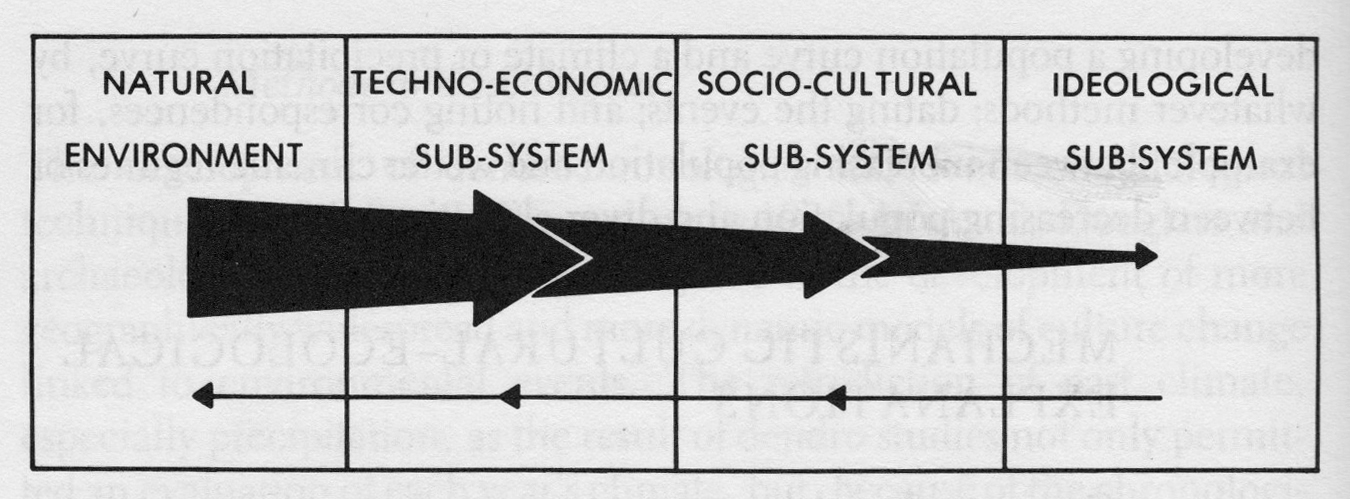 Figure 3.1 – Gumerman’s mechanistic model of cultural-environmental relationships
(Source: Gumerman 1988b, p.8, figure 1.1)
 Figure 3.2 – Gumerman’s dynamic model of cultural-environmental
relationships showing a more integrated approach
(Source: Gumerman 1988b, p.14 figure 1.2)
The SRL model shares with processual approaches that it is used to search for the reasons behind observed variations (Barrett 1994; Lucas 2001; Trigger 1996), accepting that there might be multiple variables at work (Bettinger 1993). It differs in the fact that whilst processualism believed that economic and ecological approaches were adequately representative of human existence in the past, the SRL approach does not, requiring social, symbolic and other conceptual considerations to be included. However they both share the idea that modelling is one approach to assessing data, and that human behaviour can be used as a basic unit of examination.
3.2.1.1 Systems approaches
Processual archaeologists derived many ideas from outside the discipline, one of which was systems thinking, a set of approaches with which the SRL approach has an overlap. In archaeology early systems-based ideas looked at the way in which different components and variables act upon each other to produce balanced economic systems, which exist within an ecological system that constrains and acts upon economic activities. At its simplest, systems approaches are conceptual frameworks for the study of relationships between identifiable wholes (Silberbauer 1981, p.xiii). It should be noted that systems thinking differs from systems theory, the former looking at livelihoods as a series of interacting parts, the latter an explicitly mathematical way of modelling such systems.
Grahame Clark’s approach is a good example of functional systems approaches, with basic components of social organization linked together in ways that indicated causal relationships should aspects of one or more than one component change, influencing the functionality of the system as a whole, which he expressed in a very simple diagram (J.G.D. Clark 1939). By 1952 Clark had to come to the conclusion that systems were self-regulating, a set of interdependent balances (Clark 1952, p.8), with periods of disequilibrium representing periods of transition between phases of equilibrium, where “the tendency must always have been to achieve a new harmony between society and its external environment” (1952, p.9). He saw economies as “an adjustment to specific physical and biological conditions of certain needs, capacities, aspirations and values” (1952, p.7). By 1957 he had developed this into the complex systems model shown in figure 3.3 (J.G.D. Clark 1957, p.175). The diagram clearly indicates that different aspects of society are irrevocably inter-dependent, and it both acknowledges snapshots of time and emhasizes that changes happen over time. It also emphasizes the connections between different aspects of society, their interdependencies. The importance of this diagrams is that it clearly linked economic, domestic, ecological and cultural elements, indicating that they are all important in influencing outcomes, but he saw all aspects of livelihoods as driven by economic factors, which coloured his explanations of how livelihoods may be understood. Although he asserts that the form of economic activity demonstrated by a community is “to a greater or lesser degree influenced or even conditioned by culture,” an idea that is not a million miles away from post-processual ideas, he sees the mediator between culture and the ecological framework as “stable forms of economy” that result from perfect adjustments within his scheme (Clark 1952, p.7).
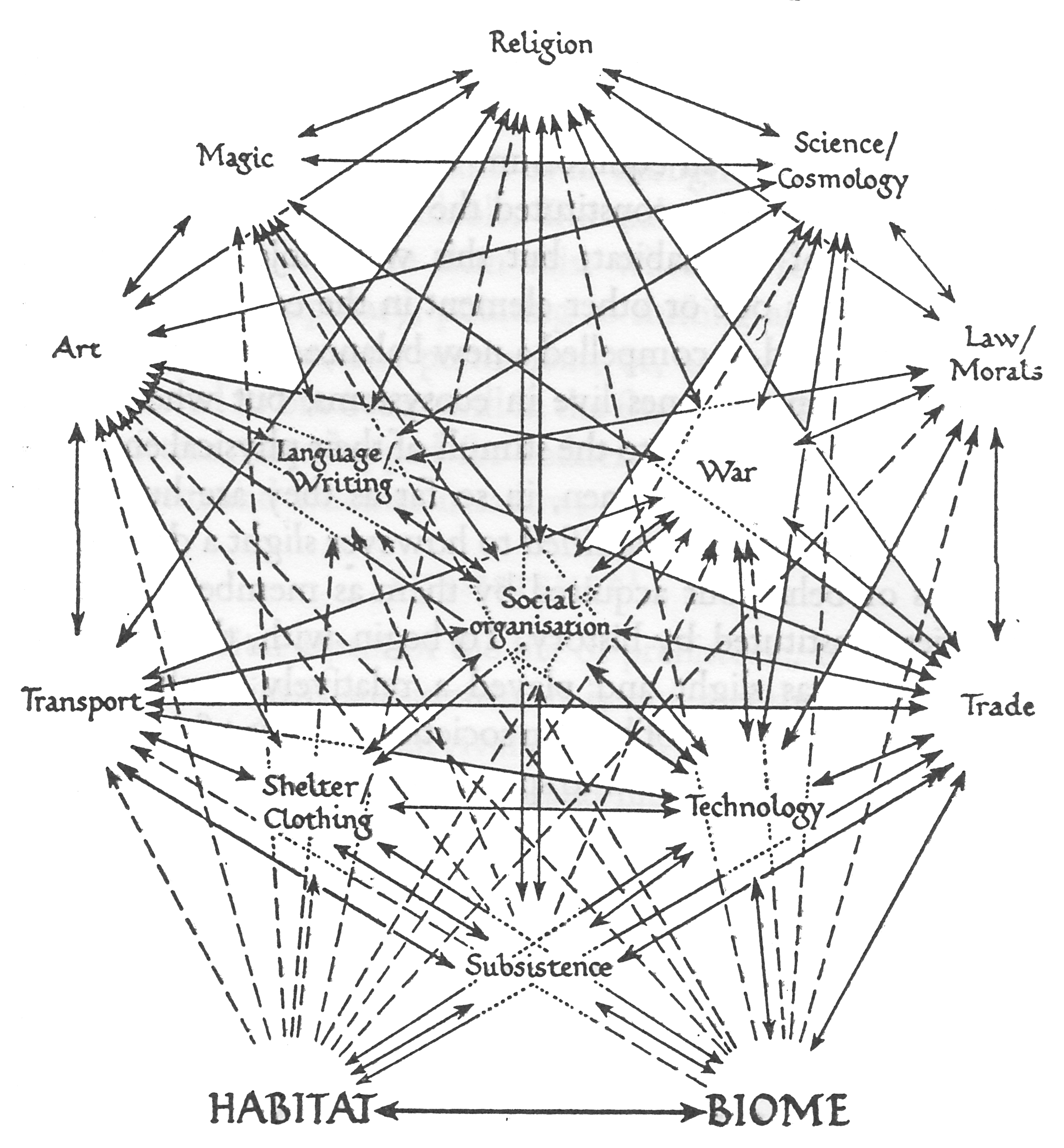 Figure 3.3 – J.G.D. Clark’s system diagram 1957
Clark’s 1957 system model differs from the SRL model in several ways.
First, it situates habitat and biome as the two major organizing influences and is heavily dependent on the impacts of internal changes without explicitly incorporating the potentially influential variables from outside that closed model. It is therefore essentially limited to internal systems of behaviour, other than biome. Another difference is that the categories are highly selective. Instead of nesting ideas within categories, as the SRL model does, Clark has selected 15 labels that may or may not be sufficient for describing the functional organization of any given group or society. Additionally, Clark believed that single communities could be used as indicators of much larger cultural units, an assumption that must be questioned on a case by case basis, and ignores landscape-scale levels of analysis. Another issue is his idea that human systems are self-regulatory and adaptive, with disequilibrium being a trigger for transition. Apart from the fact that this belief is highly proscriptive about what may cause changes, the view of smooth balance between equilibrial states has been challenged, initially by Stephen J. Gould’s “punctuated equilibrium” (Gould and Eldredge 1977) and more recently by intensive research into dryland communities (see Chapter 4, section 4.9). Clark’s belief that economic and ecological processes were the most important aspects of any archaeological investigation also needs to be challenged. As discussed in chapter 2, it has become clear that human decisions about livelihood strategies are influenced as much by social and cultural concerns as they are by economic and ecological factors. Finally, Clark’s systems model is less of a working tool than a conceptual representation of the internal workings of a community of which archaeologists should be aware. It does not allow for the development of a qualitative understanding of a specific community or the many variables that might operate on it from outside. Nor does it incorporate a means of populating the model with data. Other process-driven approaches give particular weighting to particular aspects of human behaviour. The palaeoeconomic approach of Eric Higgs and his followers, for example, was almost aggressively economic, rejecting cultural aspects as sources of influence and change (Higgs 1972, 1975; Vita-Finzi and Higgs 1970).
Within processualism, systems thinking was influential, as it suggested that different elements (sub-systems) within a society (system) could be balanced as a predictable system within an ecological setting. Hill (1970), although conscious of its shortcomings, described it as providing “a number of . . . fruitful and exciting contributions to the study of prehistoric social organization” (Hill, J.N. 1970, p.13).
David Clarke proposed a type of systems theory based analysis (Clarke 1973, 1978). His main works on the subject were Analytic Archaeology (1968, updated in his 1978 second edition) and Models in Archaeology (1972). In Analytical Archaeology he worked through the medium of artefacts and his work seems, to an extent, an extension of culture history approaches, with a heavy emphasis on object classes and culture, but he was interested in both cultural and economic concepts expressed within classes and he wanted to place far greater emphasis on explicitly theoretical approaches than his predecessors, seeking to systematize archaeological theory (Clarke 1968). He saw systems as self-regulating, equilibiral, patterns that altered as aspects in parts of the network were influenced or mutated, not unlike the ecological proposals of the same period (cf. Linstädter, A. 2010). Clarke’s famous comment that archaeology was “the discipline with the theory and practice for the recovery of hominid behaviour patterns from indirect traces in bad samples” (Clarke 1973, p.17) provides an insight into his interest in establishing robust theoretical and methodological procedures for examining archaeological remains and reconstructing the past. However, this particular vision of a model of the past (figure 3.5) was not significantly different conceptually from Grahame Clark’s, although David Clarke’s incorporated ongoing time as an element, explicitly indicating that the system may and probably will change, that human activity is constrained rather than enabled by environmental factors, and that religious activity is a more integrated component of society (Bintliff 2014; Clarke 1968). Clarke was criticized for not supporting his work with ethnographic research, meaning that it remained abstract and untested (Torrence and Van der Leeuw 1989, p.2).
 Figure 3.4 – David Clarke’s systemic model
(Source: Clarke 1978, p.134)
An experiment using systems theory, was conducted by Kent Flannery in the US. The main difference between Flannery and previous attempts to use broadly system-based structures was that his approach was quantitative rather than qualitative (Flannery 1965, 1967, 1968, 1972, 1973; Flannery and Marcus 1993). He adopted the concept of steady states and transitions between states, in a similar way to Clark’s vision of balanced versus disequilibrial states. He encouraged “inquiry into the mechanisms that counteract change or amplify it” (1968, p.85). Flannery had a particular interest in the management of cultural information and its management within cultural systems (Flannery 1972). Again, the natural environment was considered to be the dominant influence on human society and behaviour. He integrated concepts of feedback derived from cybernetics, with negative feedback being a largely steady state and positive feedback bringing about permanent change. His belief was that in treating culture as a mathematical problem it could be represented objectively in a way that had never before been attempted. Flannery measured feedback through exchange of goods and information and energy expended by the groups represented in the archaeological record. He understood changes or transformations as potentially multi-causal because, like Leach (1973a), Flannery was very aware of the diversity he observed in case studies. Flannery’s approach shared with other systems approaches the belief in a simple shift between steady states via adaptational mechanisms that accumulate over decades or centuries (Flannery 1967). The undeniable strength of his systems approach lay in its ability to describe interactions within a system, but it was less successful for explaining the cultures and transformations that it described. For one thing, it was very rarely possible to assign quantitative values to all the variables for which values were required, a problem that Flannery himself acknowledged in his 1968 paper about the use of systems theory in Mesoamerica. A second problem was that mathematical approaches have been too rigid in their requirements for every sub-system to relate to others in clearly defined ways, which is impractical when the relationships between subsystems may vary considerably (Dark 2002, p.173). A third weakness was that his explanations were based on the assumption that change was a matter of shifts between steady states and transitional periods, which oversimplifies how societies change and how these changes may occur. Although mathematical models have improved in the ways in which they tackle interactive processes (e.g. Mc Glade and McGlade 1989) there is still no consensus on how mathematical modelling can help to interpret past societies.
A different type of systems approach is exemplified by some of the positivist processualist archaeologists in the next era of archaeological theory, in which only material record and functional aspects were considered relevant for informing archaeological interpretation and locating general behavioural laws in nature that could be applied across the board, as well as focusing on people-artefact interactions and the formation of the archaeological record (Barrett 1994; Knappett 2011; Lucas 2001; Schiffer 1972, 1983, 1985, 1987; Trigger 1996). This lead to a focus on economic, technological and ecological behaviours that led in turn to variations in the archaeological record (Johnson 2010; Trigger p.373, 1996). Michael Schiffer is one of the best known of the behavioural-systems theorists, heavily and importantly emphasizing the formation processes that influenced what happened to artefacts between when they were made and when they became archaeological finds (Schiffer 1972; 1983; 1987; 1995). In his view, there is no direct relationship between artefacts and past behaviours, and therefore the archaeological record is a distortion of reality, and the key to recreating behaviours that led to it were the cultural and non-cultural processes that formed the archaeological record. This work put a lot of emphasis not only on the formation of the archaeological record and how it should be analyzed, but also on inference and interpretation (LaMotta 2012, p.64). LaMotta describes a behavioural system as “developed in the first place as a body of method and theory for understanding the archaeological record and the patterning encoded in that record” (LaMotta 2012, p.86). They distinguish between external changes (climate and immigrations) and like Clark in the 1930s and 50s, they see changes within the system emanating from alterations to linkages between activities, which they describes as “linkage factors.” Interestingly, unlike Clark’s model, this model of archaeological interpretation defines an analytical boundary for a behavioural system that is functionally separated from the environment in which it is situated.
Many of the systems, behavioural and process approaches see the material world in terms of different categories of behaviour – economic, religious and social, and their inter-relationships. As Barrett says, societies are seen as types and the logic for how these types operated is investigated normatively (Barrett 2001, p.146). They are seen as somewhat formulaic, homeostatic and mechanistic conforming to basic rules of human behaviour, and do not allow for the “cultural disposition” through which actions were taken or the meaning of artefacts as facilitators of social practice (Barrett 2001, p.146; Van Der Leeuw 1989). The systems approaches also appear to leave “little space for individuals, cognition and symbolic behaviour” (Dark 2002, p.173) which made it unattractive to post-processualists.
A final criticism levelled at systems and structural approaches relevant to this thesis is that they focus on steady states to the detriment of explanations of change, which they either fail to incorporate or wish to describe as a switch from one steady state to another as in Clark’s 1952 conceptualization described above (Bailey 1983, p.170; Holdaway and Wandsnider 2006, p.185). There is obviously a real danger of this. However, the SRL model is situated within a context of dynamism, of ongoing influences, and the radar diagrams described in chapter 2 are a tool that represent what admittedly appear to be steady states graphically show strengths and weaknesses in the different aspects of the matrix, indicating how changes might be occurring and where they might be leading.
Superficially, the parallels between the above systems and the SRL model seem clear – there is a division of a social group into units of analysis that emphasises linkages and alterations between those linkages and a belief that there might be multiple variables at work. The SRL approach shares many of these interests, but it differs in a number of significant ways – 1) it incorporates the belief that human groups are influenced not only economic and environmental factors, as Clark also believed, by social considerations and insists on a full survey within all the categories of the matrix; 2) it is situated within a dynamic context; 3) it emphasises multiple levels of human engagement with livelihoods; 4) it is a tool, not merely a graphic representation; 5) explanatory variables are made explicit within the SRL so that the relationship between vulnerability, opportunity, assets and outcomes is clearly demonstrated; 6) it not only sees the social unit as a correct and proper unit for analysis, but also incorporates ideas of social expression, differentiation and agency as important influences on livelihood management; and 7) whereas systems and structural approaches focus on steady states to the detriment of explanations of change (Bailey 1983, p.170; Holdaway and Wandsnider 2006, p.185), the SRL model is situated within a context of dynamism, of ongoing influences.
The SRL model has something in common with other approaches that break down society into functional parcels and portray different social elements interacting with environmental and economic variables in ways that are potentially transformative to all. However, although the SRL model is theoretical in appearance it was developed to solve practical problems in real-life situations, problems concerning social as well as economic change that previous approaches had failed to address. This is a model based less on theory than on the outcome of real-world practice in development economics. The main differences are the categories used, the weighting of the components and the emphasis that although all processes take place within the framework of social activity that might be termed a system, these systems are composed of complex ideas, people and actions, may be impacted by elements both from within and outside a system, and are constantly subject to change. The SRL approach, in looking at both material and more ephemeral assets and needs, makes room for both processual and post processual approaches, including agency and phenomenology, within the Social, Human and Personal asset categories.
3.2.2 Post-processualism
In the 1970s, various new ideas emerged that moved archaeology in different directions, influenced by a number of ideological approaches from outside archaeology (Patterson 1990, p.191), and concerns about the explicit search for general laws of human behaviour (Patrik 1985). Post-processualism, a whole basket of related ideas, each with different ideas and approaches, took an alternative view to processualism, emphasising how societies organized themselves, the active role played by cultural and ideological components in human life, the way that material culture embodies ideas and is used to transform societies and how people may have experienced their own lives and the contexts within which they lived those lives (Barrett 1994; Hodder 1982a, 1985; Johnson 2010; Lucas 2001; Patterson 1990; Trigger 1996). The frustration with processual approaches in the late 1980s and early 1990s can be illustrated by John’s Barrett’s book Fragments From Antiquity:
We produce more generalized histories, not of ‘people’ but of ‘processes,’ which place this or any other life in a larger context of economic and settlement systems, or in the mechanisms of social evolution. These layers of generalization have the effect of burying the individual (Barrett 1994, p.1).
In post processual archaeologies the roles of individual groups, people and events are given much greater emphasis (e.g. Barrett 1994, p.1-3; Dobres and Robb 2000; Gardner 2004). In addition, ideas derived from linguistics were used to explore ideas of changing behavioural codes, the underlying grammar of everyday life that can be manifested in symbols and monuments, and can be manipulated and modified to cope with different scenarios (Glassie 1975; Hodder 1982; Levi-Strauss 1963; Patrik 1985; Preucel 2010). All of these ideas reach into the areas of inference that Hawkes thought were difficult to infer by archaeology (Hawkes 1954, p.161-3), reaching beyond the purely economic and functional aspects of life researched by processual archaeology. His ideas are not a million miles away from Bloch’s distinction between transactional and transcendental (Bloch 2008 p.2056-2057). A whole new body of theory was required to address the issues picked out by Hawkes. Post-processual archaeology is largely about how those issues might be addressed.
Writers like John Barrett (1994) and Ian Hodder (1985) have emphasised the importance of people and what they did to create their own social environment. They emphasise the importance of actions upon material and the importance of material as it transforms into culture and the importance of culture as it acts on people and on communities. Although post-processualists also talked about processes that can be identified and understood, the emphasis was on the diverse nature of those processes and the way in which people were contributors to a socially active system composed of internal relationships, knowledge ideals, beliefs and consciousness, all social behaviours that not only fed into economic and cultural output, but were part of the same feedback system (Barrett 1994). This is very consistent with the thinking behind the design of the SRL model.
Evolutionary ideas were also challenged. For example, Barrett (1994) and Morris (2015) reject all evolutionary approaches and see behaviour as socially and culturally mediated, with factors other than biology or simple rational adaptability influencing what decisions are made and how societies operate. This will be looked at in more detail in the discussion of agency, below. Enduring amongst the post-processual ideas that can be applied to the prehistoric past have been those of materiality (including phenomenology) and agency. The idea that humans have input into their own destiny is core to the SRL approach, which was developed out of an understanding that economic factors are not the only ones to influence decisions and strategies. Instead, it is accepted that social, ideological and cultural factors play an essential role in the making of decisions.
Another line of inquiry concerns how decisions are actually handled in anthropology. Based on Langley et al (1995), Boholm et al (2013) describe three common errors in understanding how decisions are made: 1) reification, “a tendency to treat a decision as an object rather than a social construct” (Boholm et al 2013, p.100), 2) dehumanization, which implies that all decisions are rational without reference to experience, memory or social process, all influences that can alter how decision are perceived and what decisions are made; and 3) isolation, the assumption that decisions are divorced from other decisions and the process that provide the dynamic context in which decisions are made. Decisions may also be heavily influenced by what others in the neighbouring area are doing and perception of the risks that they are taking (Boholm et al 2013, p.100-105). Rationality, an assumption that there is an empirical relationship between alternatives and outcomes, is therefore not quite as viable as a tool for understanding decision-making as it might first appear. Finally, they comment that decisions “have a dubious ontology since it is not always clear from the facts at hand if there is a decision or not” and that even if it is determined that a decision has been made, it may remain unclear what the decision entails and how it came into being. Archaeologically, this obviously presents challenges, and I have concluded that the best way of investigating it is through an exploration of risk and uncertainty, which will be discussed in chapter 5.
3.2.2.1 Culture and Materiality
Culture is defined throughout this thesis as the material expression of ideas, ideologies and identities that are common to households, communities, wider kinship groups and, potentially, larger geographical areas. Culture may be expressed through a wide variety of physical media including settlement arrangements, technologies, craft work, ways of performing everyday activities, complex rituals, and the construction of ceremonial structures. Different approaches to ideas of materiality can be explored and incorporated by anyone using the SRL model to prise information from the archaeological data about materiality and related concepts.
Materiality is a logical outcome of the idea of culture. Materiality is an approach that looks at how inanimate objects relate to how people interact with them, perceive them and respond to them. As with concepts of agency, described below, materiality is relevant to the current project because it expresses a way of looking at material objects, buildings, landscapes and other entities that consider not merely their function but their role in defining and transforming societies, in how people experience life beyond the economic and ecological. As Gero points out, material culture is produced “not merely to subsist, but also to form, maintain and transform social relationships” (Gero 1989, p.92). Because cultural output is often identified with tradition, changes in cultural remains may be indicative of larger economic and social transformations (van der Leeuw and Torrence 1989). Much of materiality in archaeology is based on, or at least inspired by Bruno Latour’s “Actor-Network Theory” (Latour 1993). It moves beyond the Marxist interest in how materials are converted via modes of production into objects that are defined by different social forms and hierarchies. Whereas Marxist materialism is a deliberate ideological overlay on material, an agenda of legitimization and disguise, materiality is not self-conscious. It entwines human and object in a mutual relationship. Hodder described it as “human-thing entanglement” (Hodder 2011). It incorporates the idea that material objects, or as Holbraad puts it “things” (Holbraad 2011) carry different types of communication beyond language, and may have ideas tied up with why they were made, how they were used and how they were tied into social knowledge and experience. “Things,” which may be as big as landscapes or as small as arrowheads, are not merely passive but have a role of their own to play in reinforcing culture or expressing transformations (Johnson 2010, p.225). In the past material remains have often been seen as largely inanimate socially, and have used data to reconstruct edifices of information rather than being seen as participants in a dialogue between people, knowledge and ideas. Today, in studies of materiality, objects are not seen as secondary or epiphenomena for the people that made them (Johnson, 2010, p.225) but part of the world-view that people carry with them and express through activities. However, materiality is no one thing: “it is hard keeping track of the measure of materiality when it is used in so many different archaeological contexts, not to mention neighbouring disciplines” (Knappett 2012, p.188). There are objections to how materiality is employed. Trigger, for example (1995, p.454) says that there is great variation in “the intensity with which particular beliefs manifest themselves in material culture” which “may vary considerably over time” meaning that “continuity in beliefs is not necessarily matched by continuity in their expression in the archaeological record.” Subsets of materiality are symmetrical archaeology (Olsen 2012, p.209; Witmore 2006) and phenomenology (Trigger 1996, p.474, 524; Ashmore and Knapp 1999; Barrett 1994; Bender 1993; Bradley 2000, 2002; Gosden 1994).
5.2.2.2 Cognitive Archaeology
Cognitive archaeology has the almost unique distinction of being a theory developed within archaeology itself. It is described by its main exponent, Colin Renfrew, as an attempt to “develop a secure methodology by which we can hope to learn how the minds of the ancient communities in question worked and the manner in which that working shaped their actions” (Renfrew 2005, p.41). The pivotal interests of cognitive archaeology are the evolution of the human brain and the way in which cognitive advances are matched by new abilities to process information, apply knowledge and make decisions, leading to increased social, economic and material complexity (Flannery and Marcus 1993; Mithen 1990; Renfrew 2006, 2012). It is Renfrew’s belief (Renfrew 2012, p.125-8) that most of this cognitive ability did not express itself until humans secured a steady food supply and became sedentary, when it engaged fully with the material world (Renfrew 2012, p.129). Cognitive archaeology incorporates materiality, in which new meanings are generated as humans engage with materials via knowledge and action to create objects embedded with meaning via symbol and icon and lead to innovation (Renfrew 2012, p.129-30). In this thesis, the exploration of both mobility and semi-sedentary livelihoods touches on the issues explored by Renfrew.
5.2.2.3 Agency
Agency is relevant to the use of the SRL model because 1) any approach that divides livelihoods into components needs to incorporate the role of the individual, if only to accept or reject it or merely acknowledge it; 2) partly because the “Personal” category of the matrix explicitly acknowledges the experience and perception of the individual and 3) any discussion about risk and opportunity must be seen in the context of decision-making scenarios.
Matthew Johnson warns that agency is “massively under-theorized” and that agency will signify different things in different societies and different historical contexts. In his view, agency needs to be seen in the context of the historical, social and natural environment that produced it and there should be no attempts to produce a cross-cultural concept of agency (Johnson 2000, p.214). It is not surprising therefore, that agency has been tackled in different ways by a number of writers. Two collections of papers (Dobres and Rob 2000 and Gardner 2007) illustrate this. In fact Johnson believes that there should be no attempt to develop cross-cultural concepts of agency. He sees agency as varying depending upon society and context in a dialectical relationship to structure: “different social structures produced and are reproduced or transformed by, different forms of agency” (Johnson 2000, p.213).
A lot of ideas of agency are embedded in the concept of reflexivity, which was already being applied to the social sciences in the 1930s by pragmatists like Dewey (1938) and Mead (1934). Their ideas were in many ways antecedents of the work of Anthony Giddens (Giddens 1976, 1979, 1981, 1984) and Pierre Bourdieu (Bourdieu 1972, 1981, 1984; Bourdieu and Waquant 1992), whose work directly influenced archaeological discourses on agency. Crudely, in the Giddens scheme individuals have more independence and influence over events; Bourdieu’s scheme sees people as born into patterns of behaviour from which it is difficult to make a break. Both have been very influential on archaeology, and both have been criticized for flaws and limitations (Parker 2000).
For practical purposes, and depending on the writer, an agent may be a) just one person, b) an agent can be a group of people acting together to influence an outcome, or c) a sub-set of society like a gender, age-group or social class can be considered a separate sort of agency, all ideas expressed in Gardner’s edited volume on agency (Gardner 2007). Gardner himself, for example, refers to “collective agency,” which he defines as “small-scale institutions of individual communities” that contain within them the potential for change (Gardner 2007, p.43). This would agree with sustainable development specialist Dalal-Clayton’s observation that individuals participate in the development of their own livelihood strategies and cultures via formal and informal structures and procedures, emphasizing that participation is the means by which individuals influence the decision-making process (Dalal-Clayton et al 2003, p.91-92). Phenomenology has also found a natural partner in agency, emphasising the relationship between the viewer and what is being viewed (Meskell 1999).
The SRL approach, in looking at both material and more ephemeral assets and needs, makes room for agency. The essential difficulty in looking at palimpsests is poor chronological resolution. This gives the impression that a site or location does not appear to change significantly over time. It is perhaps easier to detect individual inputs on the micro level than when longer term changes are being discussed. Where significant changes are observed decisions were involved, and it is possible to look from the decisions to the decision makers and speculate on who made the decision (a single leader, a decision-making body, a family) and suggest their intentions. Where stratigraphic data is present, longer term activities and changes in those activities can also be discussed. The SRL model allows this sort of marriage between different scales of analysis but with the particular datasets involved in the four case studies it has been difficult to drill down to ideas of agency. Having said that, the Human section permits discussion of how individuals might have experienced life in terms of health and nutritional wellbeing. The Social asset looks at how people may have organized themselves and connected with others, and the Personal asset explores how they may have been influenced by and been able to influence the society in which they lived. The Personal aspect of the matrix reflects two aspects of life: a) that increasing social complexity offers increasing opportunities to members of society as individuals whether that is by having a certain amount of personal freedom or contributing to decision-making and b) that societies are not determined by environmental or even political conditions. In archaeological terms it is probably the most nebulous. Hamilton-Peach and Townsley 2007 explain the personal asset as follows (2007, p.2-3):
“It is intended to emphasise people’s internal motivation, their will to act and promote change (for themselves or others), their drive to assert their rights and the spiritual side of their lives . . . from experience in SL training it is clear that health and education aspects of human assets tend to obscure these other extremely important features of people’s lives.”
As Morse et al (2009 et al, p.59) suggest, the idea of a community as a single entity is something of a myth, as populations are far from homogenous. By considering the Social, Human and Personal components of the matrix, it should be possible to retain a sense of the individuals who are sometimes subsumed by the concept of a system.
3.3 Issues of scale
One of the benefits of the SRL approach is that it can incorporate multiple scales. Zimmerman and Artz (2006, p.129) define scale as a representational model of something that exists as an implicit understanding, a construct that we impose in order to approach the reality that the term “scale” contains. N. Smith (2000) defines three types of scale: cartographic (at the level of the map), methodological (research-selected), geographical, and conceptual (the experiential overlay that people place on areas). Scales may also be temporal and social. As Lock and Molyneaux point out (2006, p.xii), it is the challenge of the archaeologist “to understand the dynamics of scale that entered into production and to account for these in interpretation” and as Gosden and Kirsanow warn (2006, p.27) “each set of archaeological evidence contains nested within it a number of different forms of duration and means of measurement.” This section discusses temporal, geographical and social scales.
3.3.1 Temporal scales
One of the theoretical tensions in archaeology is the contrast between the archaeological record, which is made up of short-term events, and interpretations that generally emphasize the medium and long term (Lucas 2001, p.135). Different processes and events will have different impacts at different temporal scales. For example, in the annual round of nomadic pastoral mobility time can be measured in days and weeks. The annual round of mobility operates within certain seasonal parameters and influences the degree to which land is exposed to grazing, how long that land takes to recover and the health and viability of the grazing herds. Time at this scale is of essential importance to a community whose decisions are based around animal health and the need to make decisions within the course of a year (Savory 1999; Voisin 1988; Weber 2011). Lucas (2005, p.217) draws a distinction between chronological time and real time. He sees chronological time as a construct deriving from the modern western sense of life lived on a continuum from past to present, simple to progressive and complex. Real time, by contrast, emphasizes human existence as a flow of life, a series of short-term durations tied together by longer term narratives, which results in various different types of temporality. This seems very cogent when looking at the various livelihoods operating in the eastern Sahara during the mid Holocene, which were clearly non-linear and highly variable in chronological terms. Stephen Shennan also looks at different types of temporality when he draws a distinction between the static appearance of cultural distributions and the dynamic non-equilibrial processes of lives as they are lived by populations (Shennan 2000, p.817). He also makes the point (p.818) that radiocarbon dating and subsequent calibration creates a “smearing” effect that conceals dynamism and instability. Time can therefore be measured archaeologically in terms of millions of years down to that of a single lifetime or event (Lock and Molyneaux 2006; Gosden and Kirsanow 2006; Hodder 2000) and there is great difficulty bridging between the “histories of the long-term “and the momentary and idiosyncratic event” (Barrett 1994, p.2).
A different approach to temporal scale is that evident in how it is experienced by some modern groups on a social level. Crandall, for example, describes two different categories of value based on the Himba’s larger value set of matrilineal descent and transfer (wealth and power, rites of passage and little activity of symbolic importance), and the more specific set based on patrilineal descent (belonging to the world of the ancestors, with great symbolic value) one reflecting the transient everyday world, the others representing the timeless world of God and the ancestors (Crandall 1998, 2000).
Temporal scales are an unavoidable problem in this thesis, precisely because of the ephemeral nature of the data and the way in which much of it is in the form of palimpsests. Because some of the subsistence strategies rely on mobility, some groups may exist across scales, for example moving over landscapes, pausing at base camps and using temporary campsites to extract raw materials. A recurring problem in desert prehistory is the process of deflation, whereby long-term processes are reduced to palimpsests, where time is condensed into a single archaeological unit. The same is true of complex rock art scenes that are built up over time. One of the problems is that these palimpsests of archaeological material largely eliminate signs of change, and make it difficult to detect variability; there is a very real sense in which the temporal patterns that people were engaged with on a day to day basis are often not those preserved in the archaeological record (Bailey 2007, p.199). However, long term change is an accumulation of short-term changes over time, and the emphasis of the SRL approach on high levels of detail can only assist with understanding social and economic behaviours, the role and development of culture, and the processes of transformation and change.
3.3.2 Geographical and dimensional scales
Topics like materials acquisition, nomadic herding and long-distance trade/exchange are discussed at the landscape level, but questions of local exploitation, habitation, tool manufacturing sites and individual artefact production are at a far more local level. Openshaw (1983, p.3) states that the analytical units chosen by many studies “are arbitrary, modifiable and subject to the whims and fancies of whoever is doing, or did, the aggregating.” A similar point is made by Burgur, emphasising the importance of defining and refining survey parameters (Burgur 2002).
Geography incorporates in its definition the idea of human usage and integration with the landscape and environment in which lives are lived. Although landscapes are the basic nuts and bolts of economic life, particularly in mobile societies, they are also the means by which people define themselves and their place in life, incorporating their surroundings with meaning and understanding and this has been incorporated into many studies, including ideas of culturally and socially embedded meaning (Attenborugh 2002, p.186-7; Pollard 1999), taskscapes (Ingold 1993), dwelling (Ingold 2000; McFayden 2008; Thomas 2002, 2008), and some of the more ambitious approaches to phenomenology in archaeology (e.g. Bender et al 1997; Tilley 1994, 2004). Definitions often include a concept of space being bound, geographically or politically, and therefore contained in some way that allows it to be isolated and discussed as a coherent entity, what Kössler terms saddling oneself with “the dialectic of the border” (Kössler 2003, p.8).
A landscape is the general context within which groups exist, and over which they may move and with which they interact. The term “landscape” is clearly an artefact imposed on the surrounding geography and environment and therefore implies a certain perspective not only about its physical characteristics but how it is related to, socially constructed from knowledge that have been inherited and accumulated over long periods of time (Leary 2014, p.4; Mortimore and Adams, p.7; Thomas 2000, p.166): “landscape can be an object, an experience or a representation and these different meanings frequently merge into one another” (Thomas 2000, p.166). Jordan emphasises that the landscape can be seen as a form of material culture, a dialogue not merely between humans and nature but divine beings as well, with individuals locating themselves “within the social, material and symbolic spaces, thereby constructing their own senses of gender and identity” (Jordan 2007, p.117). Bill Sillar reinforces this point, describing how Andean communities see the world as populated not merely with observable physical life but with “animate and sentient beings,” deities and ancestors (Sillar 2007, p.154). Similarly Tilley (1994) sees locales as recognized parts of a landscape connected through “paths,” all of which are associated with memories, ideas of power, territoriality and group narratives and Barbara Bender says that “at any given moment and place landscapes are multi-vocal,” and that how people engage with them varies depending on historical conditions, gender, age, class and religion (Bender 1992, p.735). Mobile groups in particular may cover enormous distances in their seasonal round, and as part of their familiarity over generations they will come to experience and identify with different topographies, landscape features and favoured settlement, hunting and herding locations, imbuing them with memories and meanings, intellectually and conceptually constructed, part of a larger world-view (Barrett 1991, p.8, 1999, p.259; Bender 1993b; Bender et al 1997; Ingold 1993; Knapp and Ashmore 1999, p.1; C. Smith 1999; Thomas 2000, p.171). Nested within a landscape and a locality, various smaller interlinked pockets of existence are lived out, experiences influenced by mediation of perceptions of the landscape within which they operate and to which they respond, sometimes via the use of devices like ceremonies and rituals, rock art, naming practices and oral traditions (Holl and Dueppen 1999; A.B. Smith 2005b, p.138-9; Tilley 1994, p.18). As Snead and Preucel put it, these are acts that domesticate the landscape and situate people within its natural cycle in ways that tie the landscape into social action (1999 p.172-3). Barry Cunliffe refers to this as “a network of personal places (2000, p.111).
The term landscape is used throughout the thesis to indicate the contemporary topography and environment, as well as the overlays of meaning allocated to them by successive generations of inhabitants who move through them, settle within them, employ their multiple benefits and return to them. A locality is defined as an area that is occupied within that landscape, and can be made up of sites, camps and events, as well as localized topographical features and environmental settings. A site is a concentration of human activity, usually termed a settlement in archaeological literature, and may be any size. Camps are small concentrations of human activity away from the main settlement. They tend to be specialized and short term, used as hunting bases, material acquisitions and manufacturing sites, amongst others. Events are the smallest of all, and may consist of a single hearth, a single manufacturing site, or the temporary presence of one or two individuals. In all cases they may represent interactions between economic, ethnic and cultural spheres (Lightfoot and Martinez 1995).
Finally, there is the scale at which all these units are sampled – the survey or excavation, its spatial reach and its vertical depth. These samples are sometimes calculated with care, but are often determined by expedience or limiting factors like time, financial budgets or topography. Archaeological analysis extrapolates the data obtained in these sampling activities into proposals about the units as a whole, building interpretations about individual sites into visions for entire zones and landscapes (Hey 2006, p. 113; Wobst 2006, p.25; Burgur 2002). Sometimes a large site may be represented by trial trenches and even where large-scale excavations are possible they take place over numerous seasons and the understanding of the site may change from year to year depending on what emerges from the next piece of ground opened. Sampling in archaeology, and in all qualitative research, is essential (Punch 2005) but does mean that the sampling strategy and methodology employed in surveys needs to be understood by those using the resulting survey data, and that future sampling activities may change the picture (Burgur 2002).
The benefit of the SRL model being a qualitative and descriptive device, is that different levels of scale can be brought into play when the data is available. For example, when mobility is discussed, both the landscape and the locality dimensions are relevant, as groups move from one locality to another through the landscape. When short term stays at localities are discussed, both the activities that take place at the site and those that take place nearby, for example at raw material sourcing and manufacturing camps can be explored.
3.3.3 Social Scales and scales of knowledge
The social scales that one can perceive will be dependent on the geographical scale that is being observed, and the two are interlaced, with landscapes producing the most generalized understanding of how people operate, and individual events or items giving a more intimate view of how people behaved and achieved their goals. Bell (1992) usefully describes three levels of analysis, holistic (top-level social organization), individualistic (thoughts of individuals) and empathetic (inner experience). Ian Hodder (2000) also describes three levels of analysis – system (large-scale), macro (structure) and micro (event). He points out that large-scale analyses see all variation as “noise”, and that the result can be an excessively homogenous view on something that could be much more complex, failing to observe the “contradictions and conflicts” that are “lived through and resolved” (Hodder 2000, p.26). Gardner also explores the relationship between macro, meso and micro levels but sits them within global and local scales (Gardner 2007).
Because approaches of the sort used in this thesis, which looks at broad periods of time, can disguise social complexity in the interests of providing a coherent account of an area in a particular place at a particular time, it is important to be aware of different scales at which the model can and should operate, remaining sensitive to variability and the implications of that variability if it is observed. Where no variability is identified, legitimate questions can be asked about whether this is an artefact of poor data quality, as might be expected with palimpsests of the sort that make up much of dryland archaeology, or whether it is an indication of social and economic stability (Wobst 2000). Where stratigraphic data is present, longer term activities and changes in those activities can also be discussed.
The SRL model allows this sort of marriage between different scales of analysis, exploring different social scales. Discussions of a general view of society and its economy can be combined with more localized and problem-specific approaches that look at a specific type of activity and cultural output. Combining different scales in the exploration of social and economic activities offers the archaeologist the ability to approach a realistic overview of livelihoods and their management.
3.4 Qualitative Research
3.4.1 Introduction to qualitative reserch
It was emphasized in the introduction that the SRL model is a qualitative research tool. Whilst quantitative approaches are frequently used in both archaeology and the social sciences for validating observed patterns and their significance, “often it was impossible to get to grips with behavioural questions convincingly” (Jowlett 1977, p.163). Jackson et al (2007, p.22) distinguish between method (how data is collected) and methodology (the best approach for addressing a given problem). This is particularly relevant in this research, where the quality of data has determined the choice of methodology. Quantitative researchers handle their assessments primarily through statistical approaches, which require reliable and consistent statistical data Jackson et al (2007, p.23). Qualitative approaches, by contrast, are more focused on assessing experiences and accepting open-ended scenarios. For qualitative researchers a conceptual framework is usually a representation of the concepts and variables that are assumed to relate to each other, “a representation, either graphically or in narrative form, of the main concepts or variables and their presumed relationship with each other” (Punch 2005, p.53). There tend to be common themes to most qualitative research, including that it is actor-aware, holistic, descriptive, explanatory, narrative and naturalistic, often placing studies in their natural environments (Denzin and Lincoln 1994, p.141; Punch 2005). Data, usually from multiple sources, is often unstructured at the point of collection and requires the imposition of structure. Case studies are a fundamental feature of qualitative research, aiming “to understand the case in-depth, and in its natural setting recognizing its complexity and its context” (Punch 2005).
Quantitative techniques have very high potential for addressing questions of significance where material differences are noted between sites and between areas, for example between tool types. Even where the function of tool types is unknown, significant differences between them would suggest choices based either on preference or on economic role, both of which would be worth exploring. Similarly, where certain activities can be quantified, such as labour input, productive output, market information and population size, these variables could assist with questions of economic activity, risk and sustainability. Causal relationships could also be assessed in temporal studies. Datasets, however, need to be better than those in the areas under discussion here.
A potential danger with qualitative research projects is that “they appear natural, straightforward, even ‘obvious,’ and thus easy to accomplish” (Walcott 2009, p.3). As Walcott goes on to say: “Were it not for the complexity of conceptualizing a qualitative study, conducting the research, analysing it and writing it up, perhaps they would be” (Walcott 2009, p.3). Those employing qualitative approaches must accept that data collection and analysis using qualitative techniques is not an entirely objective process and that researchers bring their work particular paradigms, knowledge and biases into their work (Corbin and Strauss 2008, p.32).
The quality of the description in qualitative research needs to be high because it is not as immediately transparent and testable as quantitative research and it feeds directly into any explanation. Getting the what right is therefore essential for establishing confidence in the why. Explanations, looking at why a described situation exists, search for causes, reasons and accountability (Corbin and Strauss 2008, p.15) and are dependent upon the preceding description for their integrity. The SRL approach therefore combines an emphasis on the collection of robust data to support the explanatory component.
Qualitative methods are therefore more appropriate to the data addressed here and the questions being asked of it.
It was emphasized in the introduction that the SRL model is a qualitative research tool. Jackson et al (2007, p.22) distinguish between method (how data is collected) and methodology (the best approach for addressing a given problem). This is particularly relevant in this research, where the quality of data and its publication have determined the choice of methodology, essentially a choice between quantitative and qualitative approaches. Whilst quantitative approaches are frequently used in both archaeology and the social sciences for validating observed patterns and their significance, it is sometimes “impossible to get to grips with behavioural questions convincingly” (Jowlett 1977, p.163). The two approaches are generally presented as an either/or scenario, and this is partly because of how archaeologists decide to practice archaeology. Trigger remarked that “it is generally understood that past behavior and beliefs are not ‘discovered’ or ‘reconstructed’ by archaeologists but, rather, ‘constructed,’ ‘inferred,’ or ‘conjectured’ with varying degrees of probability” (Trigger 1996, p.508). In this statement the two concepts that recur frequently in discussions of qualitative versus quantitative approaches are conjecture and probability. Quantitative techniques attempt to move away from intuitive conjecture and move towards more replicable approaches where variables are given numerical values which are considered to have a high probability of being valid. Qualitative techniques, however, lean towards more flexible discursive and narrative approaches focused on assessing experiences, complex behaviours and accepting open-ended scenarios.
3.4.2 Quantitative techniques in archaeology
Quantitative techniques in archaeology range from simple statistical approaches to complex computational modelling simulations that have only become viable since computing capacity improved and object-orientated programming languages appeared from the mid-1990s onwards (Kohler and van der Leeuw 2007, p.5-6). Quantitative researchers handle their assessments primarily through statistical techniques, which require reliable and consistent statistical data (Jackson et al 2007, p.23). At a very simple level, as Larson points out, as soon as data is assembled “you should begin looking at it, checking for errors, checking for unexpected distributions and patterns, and adjusting your research accordingly” (Larson 2017, p.412). In post excavation work, where suitable data is available statistics are a potentially powerful tool for addressing questions of significance where material differences are noted within and between sites, for example between tool types and assemblage composition. Even where the function of tool types is unknown, significant differences between them would suggest choices based either on preference, economic function or social role.
Early attempts to apply more ambitious quantitative approaches aimed to shift archaeology from intuitive towards more objective approaches, what Aldenfelder called “The Quantitative Idiom” (1978, p.14), which included classification, systems theory, predictive modelling, spatial analysis and game theoretical approaches (e.g. Ammerman 1992; Anderson et al 1988; Axelrod 1984; Gould 1969; Isbell and Schreiber 1978; papers in Sabloff 1981; Salmon 1978). These ideas developed in various directions but have ultimately lead primarily to computer simulation modelling. Today computing power is used to model everything from landscape and topography in Geographical Information Systems (GIS) to complex agent-based modelling (ABM) simulations and dynamical systems models. ABM simulations model socioeconomic or socionatural situations based on combinations of techniques where numerical values can be assigned to landscape features, such as water availability and soil fertility, and economic activities such as labour input, productive output, market information and population size. Quantifying such variables can assist with a range of questions including the sustainability of subsistence activity, the impacts of risk and uncertainty and socioeconomic change. ABM, a toolkit of approaches, all have agents (individuals or households) as the primary drivers of all action within the model, enacting micro-behaviours that contribute to the larger view visible at the macro level, and are often referred to as “bottom-up” (Chávez-Juárez 2017, p.717, p.725; Epstein and Axtell 1996; Wilkinson et al 2013). Dynamical systems models use mathematical models “to determine the change through time or one or more quantifiable properties of a system” and must be expressed mathematically (Lake 2014).
Although quantitative modelling seeks to achieve a more rigorous output than inferential approaches, it is not always as empirical as might be expected. Kintigh’s remark that intuitive approaches to archaeology “face problems of objectivity or replicability” that make it “difficult to assess the significance or reliability of these analyses” (1987, p.132) might imply an objectivity, validity and reliability of quantitative modelling that has not yet been achieved even now, due to the nature of the data, something that Kintigh himself foresaw: “We must realize that because the archaeological record is formed by people interacting in complex ways with each other, their environment and their cultural heritage (to say nothing of post-depositional processes), many archaeological problems are just inherently difficult” (Kintigh 1987, p.133) . Although GIS models, for example, are based almost entirely on empirical data, agent-based modelling (ABM), in which there is a growing interest, incorporates the inferential findings of fieldwork aided by understanding derived from modern ethnographic research to develop a framework for establishing a model. The following statement by Cleuziou, where he is identifying agents and their social structure for a model of Early Bronze Age Ja’alan in Oman, is an example: “The various extensions surrounding the courtyard all appear as single units with some autonomy. From such a pattern, we can assume a grouping of nuclear family units into larger residential compounds. Considering the importance of kinship, each compound likely corresponds to an extended family. Some form of economic and domestic cooperation must have existed inside these compounds” (Cleuziou 2012, p.220, my italics). In addition, model designers incorporate a number of assumptions, calculations and choices that need to be made transparent in the documentation. In the Village Ecodynamics Project (VEP) modelling approaches are dependent upon estimates, assessments, algorithms and existing archaeological interpretation of site features, simplification of data, assumptions and judgements: “We do not try to represent the full complexity of the study area or its culture history in our simulations. Instead we use the models to predict settlement and other patterns through time and across space given rather simple assumptions, representing the processes we deem most critical” (Kohler et al 2012, my italics). Cleuziou’s model of Ja’alan, for example, includes the following statement: “We start from the assumption that wealth was almost equitably distributed by 3000 BC. Clearly this is not fully true for our real society but seems an acceptable working hypothesis” (Cleuziou 2007, p.224, my italics).
Depending on the complexity of a model and its purposes, a model may or may not include or exclude such behavioural variables as fallibility in decision making, non-optimal behaviour, heterogeneity of characteristics and behaviours, wishful thinking, over-confidence, incorrect assumptions, variable access to information and socially- or religiously-driven priorities (Barnett et al 2010, p.471; Chávez-Juárez 2017; Elster 1989; Thaler 2000, p.133-5). Thaler refers to this as quasi-rational behaviour (2000, p.135). Quantitative models are also, like qualitative models, based on samples, or as Van Pool and Leonard put it, “imperfect and limited data” (2011, p.2). G.A. Clark when even further, warning of “coarse ‘grain,’ weak integrity, incomplete data matrices, high probability of sampling error” and expresses concern about the ability to evaluate the credibility of mathematical approximations of human systems. Fortunately there are exceptions, where projects like the MASS and VEP initiatives have access to higher than usual resolution data.
Finally, there is a danger in computer simulations, which has been identified by Wilkinson et al (2013, p.2), based on their work in the late 1990s “of using input data derived from field work and then using field results to compare with the output from the modelling: this process led to a tendency for the input to influence the output in a self-fulfilling manner.” Keeping data sources separate has been the solution in this particular project.
Quantitative modelling clearly has enormous potential but it is clearly important to understand both the quality of the original data and the sort of decisions, assumptions and behavioural variables that are incorporated into computational model designs before the value of their output can be assessed.
3.4.3 Qualitative techniques in archaeology
For qualitative researchers a conceptual framework is usually a representation of the concepts and variables that are assumed to relate to each other, “a representation, either graphically or in narrative form, of the main concepts or variables and their presumed relationship with each other” (Punch 2005, p.53). There tend to be common themes to most qualitative research, including that it is actor-aware, holistic, descriptive, explanatory, narrative and naturalistic, often placing studies in their natural environments (Denzin and Lincoln 1994, p.141; Punch 2005), all of which describe qualitative approaches in archaeology. Data, usually from multiple sources, is often unstructured at the point of collection and requires the imposition of structure. Case studies are a fundamental feature of qualitative research, aiming “to understand the case in-depth, and in its natural setting recognizing its complexity and its context” (Punch 2005). A potential danger with qualitative research projects is that “they appear natural, straightforward, even ‘obvious,’ and thus easy to accomplish” (Walcott 2009, p.3). As Walcott goes on to say: “Were it not for the complexity of conceptualizing a qualitative study, conducting the research, analysing it and writing it up, perhaps they would be” (Walcott 2009, p.3). Those employing qualitative approaches must accept that data collection and analysis using qualitative techniques is not an entirely objective process and that researchers bring their work particular paradigms, knowledge and biases into their work (Corbin and Strauss 2008, p.32). In archaeology, as with quantitative approaches, the level of site sampling needs to be taken into account, in order to insure that inferences based on a partial excavation of a site are understood in terms of their limitations and the likelihood that narratives based on partial excavations will have to be rewritten in the future. This is as true for ambitious qualitative conceptual modelling as it is for straight forward excavation reports that include an element of interpretation.
The quality of the description in qualitative research needs to be high because it is not as immediately transparent, quantifiable or testable as quantitative research and it feeds directly into any explanation. Getting the what right is therefore essential for establishing confidence in the why. Lucas (2001, p.12) states that archaeology should not be merely descriptive but explanatory at three separate levels of observation, description and interpretation, each emerging from the other. I would add explanation to his list. Interpretation and explanation are different problems and are separated out in this approach. For example, one can describe a set of contemporary hearths associated with animal bones and a much smaller volume of hunted remains found with a toolkit associated with pastoralism and interpret this as a nomadic pastoral community supplementing its diet with wild species. But it doesn’t explain why. Explanation asks the question why this particular economic activity was practiced, and to find an explanation one needs to look at all the possible variables that lead to that livelihood choice. Explanations, which look at why a described situation exists, search for causes, reasons and accountability (Corbin and Strauss 2008, p.15) and are dependent upon the preceding description for their integrity.
3.4.4 Combining approaches
In spite of the apparent dichotomy of the two methods, there are certain synergies between them, and recent work has considered how to bring them even closer together. All models are attempts to organize data for descriptive and explanatory purposes, providing a linkage between the raw data and an understanding of what that data represents, and as such a model “is not a universal scientific truth but fits some portion of the real world reasonably well, in certain respects and for some specific purpose” (Kohler and van der Leeuw 2007, p.3). Aldenfelder (1981, p.16) points to a methodological relationship between the conceptual modelling of the sort demonstrated in the SRL model and computer simulation models. Conceptual modelling may be an end in itself but is also a requirement in computer simulation modelling as a precursor to the computer model, and which both “points the way to new goals which are used to direct further research” and reveals the workings of the system to be simulated (Aldenfelder 1981, p.20-21).
Both earlier and recent authors discussing quantitative modelling approaches have highlighted the gap between quantitative methods and theoretical approaches in archaeology (e.g. Van Pool and Leonard 2011; Voorips 1987, p.61): “The use of quantitative methods is essential to current archaeology, but nothing can replace a rigorous theoretical and analytical framework” (Van Pool and Leonard 2011, p.316). This has been answered in a number of ways. For example, a number of recent studies have looked at the gap between GIS and phenomenological approaches represented by, for example, Bender et al 1997; Tilley 1994, 2004; Johnson 2007; Thomas 2004, p.198-201). Llobera, for example, looks for different bridging components between theory and methodology in his research using both GIS and interpretative landscape studies (2012). He asks whether GIS approaches have a role beyond large scale processes, whether they can contribute to discussion about the “agential capacity of landscapes and people,” and if they can be used “as a heuristic within an interpretative framework” (Llobera 2012, p.496-497). In this paper Llobera looks specifically at “visualscapes” (p.501) where the descriptive advantages of GIS are joined with theoretical phenomenological approaches to human experiences and activities to produce narratives. In this approach, GIS is used to tackle specific field problems and enrich narratives by incorporating missing data, simulating features in the landscape and helping to establish viewsheds and other patterns of visibility, and to understand altered landscapes (Llobera 2012, p.503-505). In the same volume, addressing the same issue, Gillings suggests that GIS experts should develop their own theoretical frameworks (Gillings 2012). Voss and Allen (2010) combine qualitative and quantitative approaches to improve the analysis of ceramics, combining statistical measurements with intuitive approaches to improve interpretation, whilst Van Derwarker and Peres (2010) discuss how to combine qualitative and quantitative approaches to integrate zooarchaeological and paleoethnobotanial studies, each with their own very unique characteristics. In the future, I would hope that quantitative modelling techniques may be able to assist with the task of unravelling palimpsests of the types represented in the case studies, which would be an important contribution to qualitative research in drylands archaeology.
3.4.5 Quality of Data
All approaches depend upon the availability of reasonable datasets. If this is in the form of published material, the approach taken may depend upon the way in which the data is presented. Jones (2002, p.39-40) describes the process by which excavation work is transformed during post-excavation activities in a linear but fragmented process from physical remains to an abstract format “that now only have meaning because of their representation in plans, sections, or as a set of figures and measurements on paper” in a way that “would be unrecognizable to those who inhabited the site” (Jones 2002, p.41-42). There is no general standard for archaeological publication, and even within individual projects the data supplied may be different, so that using publications to acquire consistent and reliable data for even the most basic calculations of statistical significance may be difficult. As Kansa and Kansa discuss (2014) the practical limits of conventional publication in print have prevented detailed data becoming generally available. It is perhaps unsurprising, therefore, that most computer modelling projects, such as the Modeling Ancient Settlement Systems in Mesopotamia (MASS) project (Wilkinson et al 2013) and the Village Ecodynamics Project (VEP) in Mesa Verde, southwest Colorado in the U.S. (Kohler et al 2007; Kohler et al 2012; Kohler and Varien 2012) are carried out within the parameters of larger projects that have control over handling, measurement and access to the raw data. Improvements in the organization, accessibility and standardization of presentation of data in both print and far more powerful, flexible and less expensive digital media should become a priority for the future both in the eastern Saharan archaeology and elsewhere.
The potential value of using quantitative techniques, even with the concerns described above, is considerable. Datasets in the areas under discussion in the case studies, however, lack the required stratigraphic integrity, preservation and granularity required for moving beyond conceptual modelling. Qualitative methods are therefore more appropriate to the data addressed here and the questions being asked of it. Qualitative conceptual modelling techniques derived from development economics were selected for this thesis in order to describe and attempt explanation of both economically and socially-derived activities in the early and mid-Holocene, where decisions may incorporate both the compulsion to conform to traditional ideas and methods as well as the impacts of poor decisions and unintended outcomes (Barnett et al 2010, p.471; Baumol 1961; Elster 1989; Dasgupta 1997; Gladwin 1989; Thaler 2000, p.133-5).
3.5 Conclusion
Within this complex network of different archaeological ideologies and approaches, my use of the SRL model may well be guilty of trying to achieve the best of all worlds. However, although there is an inevitable focus on building an overview of a functioning system, the detail with which each component is explored is anything but broad-brush, and the model can function at different scales. Although part of the job with any exploration of dryland livelihoods is to investigate how environmental constraints influence behaviour, there is always room for discussing variation within archaeological assemblages. To understand how groups functioned within a framework of environmental constraint and opportunity, not just economically but culturally, is one of the objectives of the SRL approach. Patrik was close to the mark when she suggested that the “physical mode” of processual archaeology and the “textual model” of post-processual archaeology operate at different levels of the archaeological record, with one relating directly to physical remains and the original use of the artefacts in their social contexts (1985, p.55). It seems to me that both are necessary for a comprehensive understanding of any livelihood as it derives from archaeological remains.
Although the SRL model superficially resembles systems approaches from processual archaeology it is conceptually very different. Linkages between the assets are not measured in terms of responses of one to another as in traditional systems thinking. Instead, the respective strengths of each, judged qualitatively, are used to form an overall understanding of any livelihood situations at one time, and these can be built up into sequences to assist with identification of and explanation of change. Because it incorporates ideas of cultural reflexivity, heuristics and agency into its remit, the SRL approach is also compatible with post-processual experiments.
Page last updated 24th August 2019. See the Version Control page.
 Modelling Early Food Production in the Mid Holocene of the Eastern Sahara