4.1 Introduction
In this chapter climate change during the early and middle Holocene is described with an emphasis on mid-Holocene hydrology. This is followed by a discussion of the relationship between climate and human behaviour.
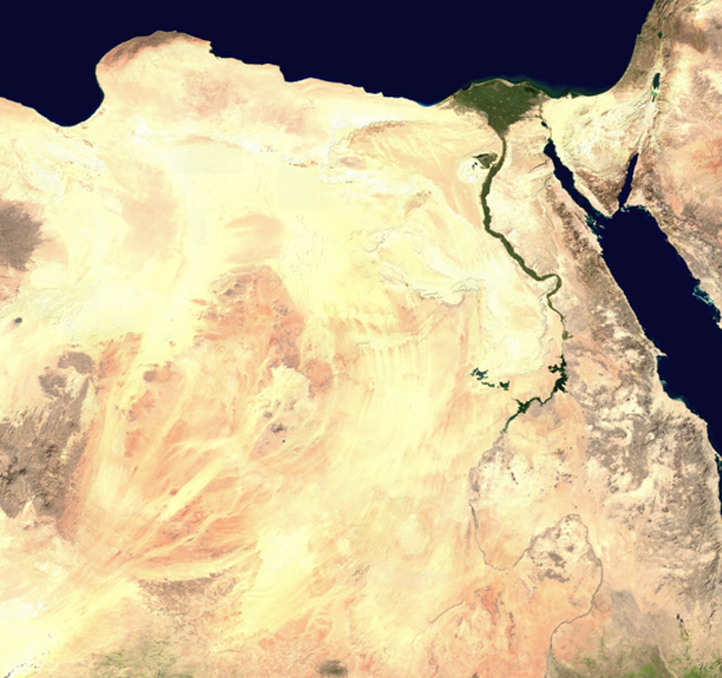 Figure 4.1 – The Eastern Sahara today (Source: NASA)
Today the eastern Sahara, incorporating Egypt, northern Sudan, eastern Libya and north-eastern Chad, is arid desert punctuated by small depressions and highland zones that support some vegetation and fauna (figure 4.1). The impact of climate on a locality depends upon many variables including geology, topography, source of water, water table level; soil types, vegetation types and coverage, solar insolation, proximity to the sea, pressure systems, wind regimes and global weather systems (D.G. Anderson et al 2007; Brooks 2006a, 2006b; Gasse 2002; Lamb 1995; Zerboni 2013). There is therefore the potential for localized and varied human responses to shifting environmental conditions. Broad regional approaches have been supported by localized studies that focus on variations within the general climatic trends. Many of the localized research projects have been set up by multi-disciplinary archaeological teams and have achieved a more granular understanding of the impacts of climate change and variability in the mid-Holocene (e.g. Kuper and Kröpelin 2006; Linstädter and Kröpelin 2004; Schild and Wendorf 2002). In spite of some of the obvious difficulties of defining how and when climate changed and what impact this had on the environment, the archaeology of the eastern Sahara cannot be understood without exploring the climate that influenced the formation of environmental contexts within which different behaviours took place (Plog and Hartman 1990; Hassan 2002a). Changes to environmental conditions, both favourable and unfavourable to human activities, might lead to significant economic and social responses which may be reflected, for example, in subsistence choices, technology, settlement patterns, social organization and cultural output. Whilst climatic conditions do not, by themselves, determine all the choices made by human communities they do create a framework of opportunities and constraints. This is discussed further in section 4.5. In turn, human intervention in the environment may also change the balance between opportunity and constraint.
4.2 Introduction to the Post-Glacial Eastern Sahara
The Holocene represents an interglacial period, commencing at around 14,000 years ago when the continental ice sheets in the northern hemisphere began to retreat (Grove 1995). The monsoonal Inter-Tropical Convergence Zone moved northwards bringing increased rainfall with it and plants colonized the newly available land (Bettinger 2006; Grove 1995; Kuper and Kröpelin 2006, p.803). During the Sahara’s climatic optimum between c.8500 and 6500bp (c.7558 – 5452BC) the Sahara and Sahelian boundary is thought to have been as much as c.500km to the north of its present line, (Lioubimsteva 2004, p.505; Nicoll 2001). Within this framework of ameliorating climatic conditions during the early and mid-Holocene there were periods of aridity that interrupted the more humid conditions of the early and mid-Holocene (Butzer 1982; Cremaschi 2002; Cremaschi and di Lernia 1999; Hassan 1986, p.65, 2002b; Linstädter and Kröpelin 2004; Schild and Wendorf 2002). Geomorphological, climatic and occupation data suggest that this variation took place, both geographically and temporally and that the regional differences were marked (Bubenzer and Riemer 2007; Hassan 2000c; Kuper and Kröpelin 2006; Linstädter and Kröpelin 2004; p.63; Peters and Pöllath 2003). Some climate shifts were very abrupt, taking place in less than a decade (deMenocal 2001, p.668; Hassan 2002b; Kuper and Kröpelin 2006, p.803; Schild and Wendorf 2002). Almost complete aridification of the desert took place by the beginning of the Late Holocene beginning at c.5300BC (Kuper and Riemer 2013).
Kuper and Kröpelin attribute this change in climatic conditions to the extension of the monsoonal ITCZ to the north, providing semi-humid climates in the south of the Sahara and semi-arid conditions in its centre (Kuper and Kröpelin 2006, p.803).
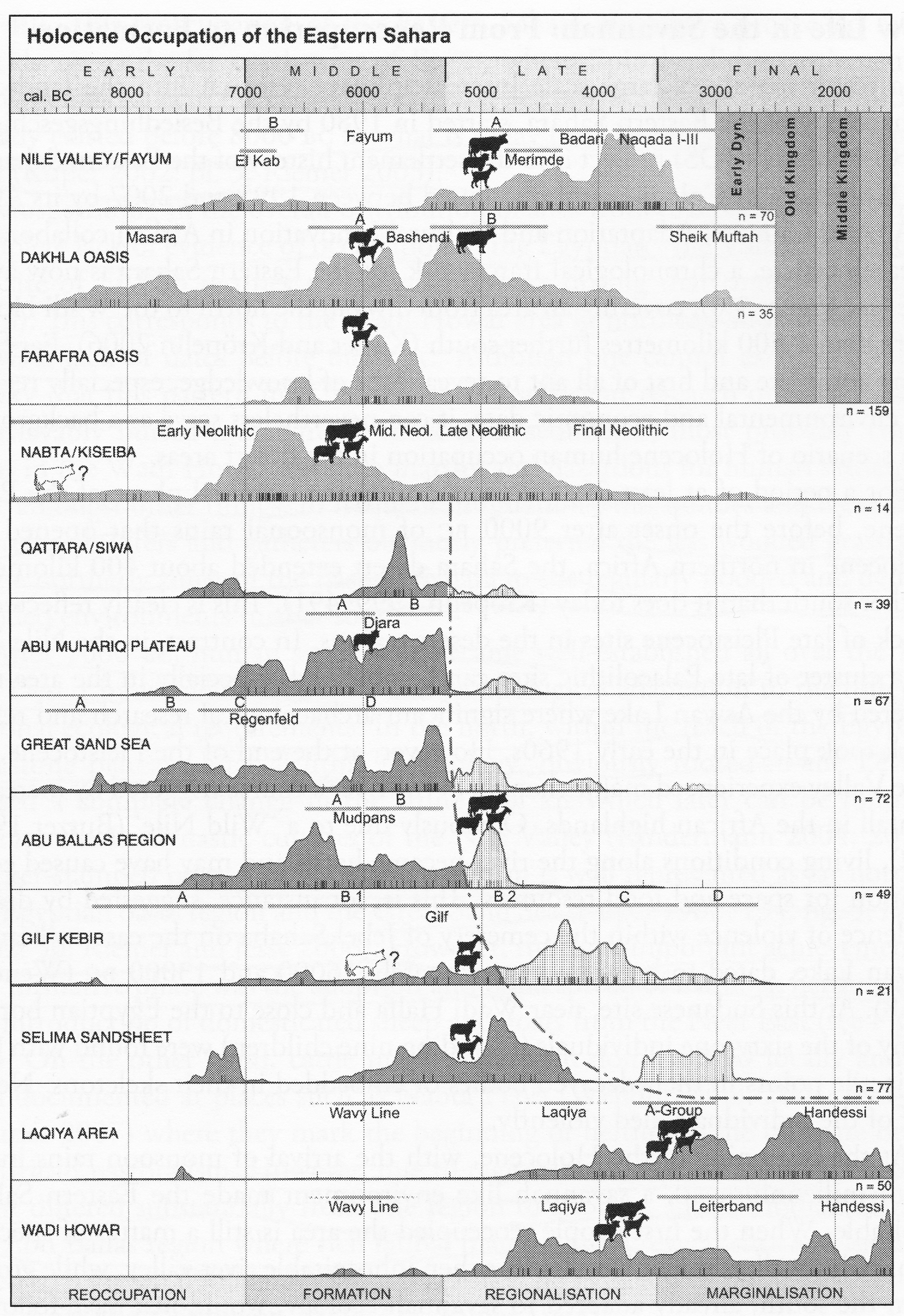 Figure 4.2 – Calibrated Radiocarbon dates showing the occupational history of
key areas on a north to south trajectory, with human abandonment of the
desert areas coinciding with the beginning of aridification in the eastern Sahara.
(Source: Kuper and Riemer 2013, p.35, figure 1.5)
The above diagram (figure 4.2) by Kuper and Riemer (2013, p.35) shows the amount of temporal as well as regional variation in occupation in the eastern Sahara indicated by calibrated radiocarbon dates, showing different geographical peaks and troughs and the degree to which areas in the south were habitable much longer than others before final drying of the Sahara, as the ITCZ retreated at the end of the mid-Holocene:
The changes taking place during the early Holocene had an important impact on human activities in the eastern Sahara, reflected in the intensification of wild grass exploitation, the development of pottery, the digging of wells, examples of sedentism and the domestication of cattle (Barakat and Fahmy 1999; Close 1995; Gatto 2011; Kobusiewicz 2003; Linseele 2010; Richerson et al 2001; Wendorf and Schild 2002). The fluctuating conditions may have driven people to gather around limited and seasonal water sources in the Western Desert, which may have led to new concepts of territoriality and social stress (Gatto and Zerboni 2015; Pachur and Hoelzmann 1991; Hoelzmann et al 2001; Shirai 2006).
4.3 The Middle Holocene c.7000 – 3500 BC
The Middle Holocene, referred to by Hassan as a “transitional interval” (1986b, p.64) is associated with the partial retreat south of the Inter-Tropical Convergence Zone, which led to increasing aridity with fewer humid phases in parts of northern Africa and Egypt. Cooling on a global basis has been recorded in many regions (Thompson et al 2006). Mid-Holocene conditions were generally drier than those of the early Holocene’s most humid phase, lake levels fell, playas were smaller and of shorter duration, biomass was reduced and there was a marked differentiation between conditions in the northern temperate areas and those to the south where the effects of the ITCZ were still felt (Haynes et al 1989; Nicoll 2004). Bahariya, the northernmost oasis in the eastern Western Desert had been occupied during the early Holocene but was abandoned during the mid-Holocene (Svoboda 2006). However conditions in the Western Desert were still wetter than today. The environment was very variable spatially, largely determined by topography (Zerboni 2013; Darius 2013). Mediterranean rainfall regimes now extended further south, reaching the Gilf Kebir in the far south of Egypt (Kröpelin 2005), and resulting in bimodal rainfall regimes in Dakhleh oasis (Haynes 1987, 2001; Kindermann et al 2006; Magaritz and Goodfriend 1985; McDonald 2016; Neumann 1989a, 1989b, 1993). In spite of the lower levels of annual rainfall, it was apparently distributed, at least in some areas, in a rather more accommodating way: instead of rare heavy summer rainfalls and dry winters, rainfall was more frequent throughout the year, enabling areas to be occupied more consistently throughout the year (Bubenzer and Riemer 2007; Linseele et al 2010; Linstädter 2005g, p.367; Linstädter and Kröpelin 2004, p.774). Radiocarbon age determinations suggest declining water availability and corresponding human activity in the Egyptian eastern Sahara, with a gradient of decreasing moisture from south to north (Kuper and Kröpelin 2006; Kuper and Riemer 2007; Nicoll 2004, p.563).
Neumann’s research compared charcoal remains of plants with those that survive in modern environments. Using this data she characterized the Western Desert as semi-arid, with desert type vegetation, probably consisting of dwarf shrubs, tuff grasses and small trees like acacia and tamarix, with variations depending on topography and geomorphology (Neumann 1989a, 1989b). Based on floral assemblages Nicoll (2004, p.565) suggests that conditions are comparable to those found at Ennedi, Darfur and other places within the modern Sahelian-Sudanian vegetation zone, and is surprisingly resilient. This is partly because of the way in which the groups who occupy the Sahara have devised strategies of dealing with risk and uncertainty, via technology, mobility, social networks and other inherently flexible and risk-handling strategies (Halstead and O’Shea 1989; Jallow 1990; Seely 2006), but it is also because wild plant communities are surprisingly resilient to hostile conditions. Increasing aridity does not necessarily cause reduced vegetation (as long as it is not associated with extreme and irreversible drought conditions). Release of carbon dioxide into the atmosphere in times of higher aridity increases rates of photosynthesis and, by reducing the size of stomatal openings, reduces water loss in plants. This makes desert vegetation more efficient in terms of water management and can reduce the impact of climatic stress (Bettinger 2001, p.145-9; Lioubimsteva 2004, p.521). A study of the western Kansas prairie over a thirty year period demonstrated that inter-annual variability actually promoted the co-existence of three common grass species, supporting an ecological theoretical concept called the Storage Effect Theory (Adler et al 2006, p.12793). Often plant community responses to climate are non-linear because key species in any environment have different physiological tolerances to water scarcity and/or osmatic stress, nutrient loss and the impacts of erosion, which can be effected by spatial patterning of the vegetation (Kröpelin et al 2008, p.768). Finally, impoverishment of vegetation always lags behind climate change (Brooks et al 2005).
A paper by Van Neer and Uerpmann (1989) is the main source of information for the palaeofauna for Western Desert as a whole, but as with the palaeovegetation, localized studies provide insights into the areas where archaeological sites are located (Churcher et al 2008; Gautier 1980, 2001; McDonald 1991b, 2001; Peters 1987, 1988; Peters and Pöllath 2003). The archaeological record is dominated by small ungulates that can take their water from leaves, roots, tubers and stems, desert-adapted foxes, hares, ostrich, scimitar-horned oryx and giraffe. Dakhleh is the exception to the rule in terms of faunal profile in south Egypt, and this is probably due to year-round rainfall provided by both summer and winter rains and the availability of perennial springs, as described above. The specific conditions in mid-Holocene Dakhleh, Nabta Playa and Gilf Kebir the Middle Egyptian Nile are all discussed in detail within the case studies.
Although the overall picture provided by the above overview of the mid-Holocene may seem bleak, modern groups using the Sahara have proved that it is perfectly possible to sustain fully functional livelihoods even in apparently hostile conditions (Halstead and O’Shea 1989; Hobbs 1989; Mainguet 2010; Manger et al 1996; Mortimore 1998; Seely 2006). The Sahara began to be abandoned after 5000-5300 Cal BC, Nicoll’s “exodus event” (Nicoll 2001; Riemer and Kuper 2013), during which period desiccation advanced considerably (Butzer 1999, p.198). The process of aridification did not occur at an even rate throughout the Sahara and some areas could be occupied for longer than others (Gatto and Zerboni 2015; Gehlen et al 2002; Kröpelin 2005; Phillipps et al 2012; Riemer 2011). The final deterioration of conditions at c.3500BC is visible at several sites in the Sahara, marked by desiccation and desertification (Kuper 2006a, p.413; Kuper and Kröpelin 2006; Neumann 1989a, 1989b; Nicoll 2004; Wendorf and Schild 1976; Zerboni 2013). As the monsoonal belt moved south, people followed in its wake (Kröpelin 1993b; Kuper 2002). When formerly occupied areas in the eastern Sahara were no longer available for settlement, a number of writers believe that conditions forced groups to migrate elsewhere towards more favourable conditions like the river Nile, the Western Desert oases, and Wadi al-Ajal in the Fezzan, (Cremaschi 1999; Hassan 2006; Garcea 1993; Kuper and Kröpelin 2006; Kuper and Riemer 2013).
4.4 Hydrology in the Eastern Sahara
A universally agreed upon range for rainfall volumes in the mid-Holocene Sahara remains elusive (e.g. Butzer 1958; Hassan 1986b; Haynes 2001; Linstädter and Kröpelin 2004; McHugh 1974a; Neumann 1987, 1989a; Peters 1988; Said 1993; Van Neer and Uerpmann 1989). From their work at the Gilf Kebir, Linstädter and Kröpelin suggest a maximum annual rainfall of between 100 and 150mm annually in the early and mid-Holocene, which also agrees with Neumann (1987) and Peters (1988), and this seems to be a reasonable figure given all the available data. Whatever the exact figure, average rainfall is a poor measure of the availability of water in desert environments where high variability means that average figures are of little use (Rosen 2017, p.73). Bearing this in mind, the picture of the mid-Holocene is one of occasional rainfall filling ephemeral lakes in the Sahara, with savannah and Sahel type conditions (Nicoll 2004, p.565). Even with not more than 50mm of rain per year, and particularly if conditions were cooler, some standing water would have been present during and after rainfall (Close 1992, p.160). However, as Rushdi Said points out: “this new frontier was not a generous environment” (1993, p. 181).
In the most eastern part of the Western Desert the Nile flows south to north from eastern and central Africa. The Blue and White Niles join to form the main Nile near Khartoum, Sudan. Nile conditions are determined by rainfall in Ethiopia and Equatorial Africa (Hassan 2007, p.105). Flood waters reach the Egyptian Nile by July and flood waters peak by mid-August, remaining static for around 3 weeks. They may rise again briefly in early October, after which they recede during November, reaching the lowest levels between April to the end of May (Hassan 2007, p.101-2). During high floods game and waterfowl will congregate along the floodplains. Between October and March the high floods recede very rapidly, making fish easy to catch. Plants re-inhabit the fertile floodplains, and swamps and marshes become filled with water birds (Kees 1961, p.93). If permeable soils absorb waters deeply enough to resist evapotranspiration they will support fast-maturing crops and allow them to germinate and develop, even in hot climates were evaporation rates are particularly high (Doolittle 2001). Variations in flood levels impose a level of uncertainty into floodplain subsistence, which continued even after the introduction of artificial irrigation technologies. As well as water the Nile brings silt from the volcanic areas to the south. The silt contains nitrogen (vital for replenishing land), iron, manganese, zinc and copper (Kish 1993). Accumulation of silt is not uniform and varies through time (Hassan 1997e, p.59-60). The gradient of the Nile’s river bed is c. 1:10,000 to 1:15,000 and this delivers the flow of floodwater over levées into the floodplain (Hassan 1997e p.61).
One of the features that differentiates the eastern Sahara from some other world deserts is the underlying Nubian Aquifer, a vital subterranean reservoir for modern Libya, Egypt, Nubia and Chad (Ibrahim and Ibrahim 2003, p.45-47; Sampsell 2003, p.147-148), consisting of porous and non-porous layers of rock that sandwich water that reaches the surface due to the curvature of the rock and depressions in the overlying surface. It was replenished with waters during the early Holocene from highland areas all over north east Africa. The Nubian Aquifer comes to the surface at the oasis depressions of Siwa, Bahariya, Farafra, Dakhleh (figure 4.3) and Kharga as well as a number of other minor oases in the form of natural springs and in the form of groundwater that can be reached by sinking wells (Ibrahim and Ibrahim 2003, p.45-47). The presence of fossil springs demonstrates that water was readily available in these areas throughout the Holocene. Because the oases are depressions, lying well below the level of the current desert surface, they are much closer to the aquifer than the surrounding areas, providing much greener and more habitable zones some of which still house substantial populations today.
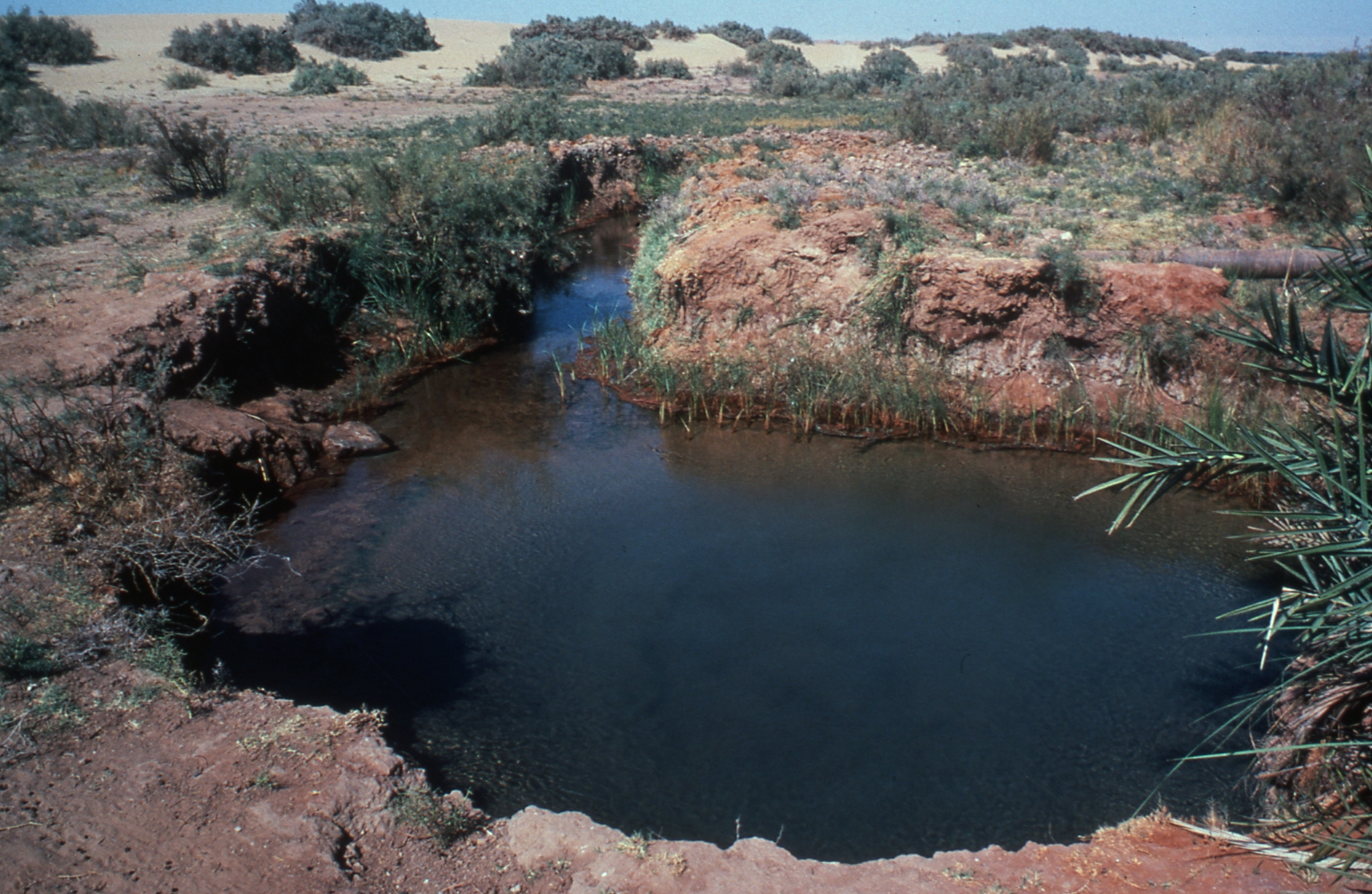 Figure 4.3 – Water from the Nubian Aquifer at Dakhleh Oasis
(Source: Dakhleh Oasis Project https://bit.ly/2KgyUQT)
Apart from the Nile and the oases, the main forms of water resource in the desert areas were the seasonal playa lakes which formed in depressions in the desert floor from short but heavy precipitation events (figure 4.4). Nabta Playa is the best known example (Wendorf, Schild and Associates 2001). In the highland area of the Gilf Kebir plateau three dune-blocked wadis also permitted the creation of temporary lakes, which were an important resource for both animal and human populations (Linstädter and Kröpelin 2004). Rainfall covering the desert floor would feed the arid-adapted shrubs and cause a burst of temporary life just as it does today in some areas like the Gilf Kebir plateau, and as it does in modern semi-arid deserts elsewhere. In marginal areas the fact that climate was unpredictable, causing annual variations in seasonal weather, would probably have been the main influence on human activity. Simple environmental decay would have led to more obvious patterns of human abandonment and migration. The fact that this did not happen in a smooth linear way argues that environmental conditions could be coped with if risk management strategies were flexible enough. This is discussed further in chapter 5 and within the case studies.
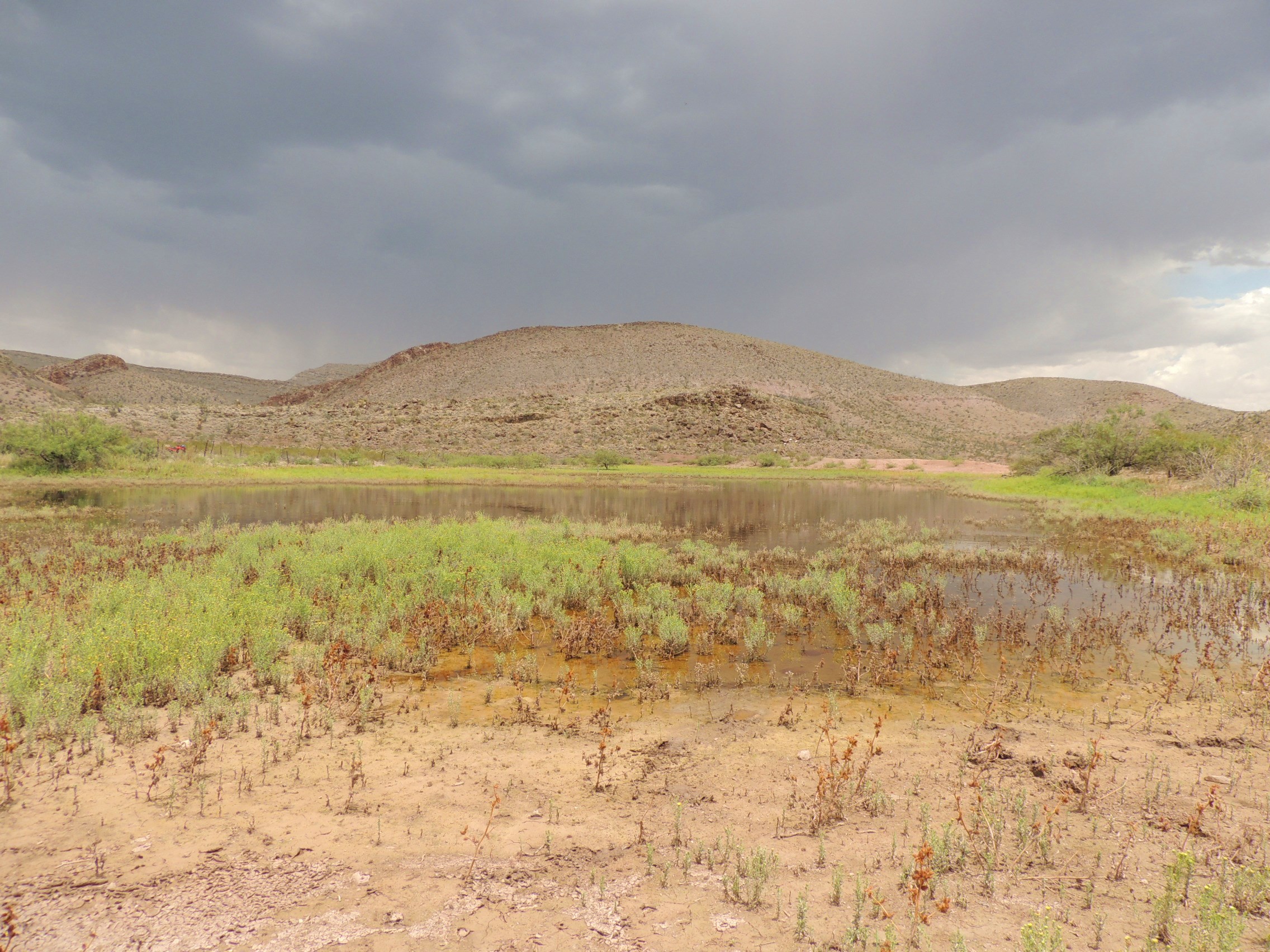 Figure 4.4 – Savannah rainfall event
(Source: Soraya Romero Desert, USA https://bit.ly/2rCMaY8)
As well as the lowland plains of the Sahara there are highland zones where humidity sustained resources even when the lowlands were uninhabitable. Even as recently as the 1920s Tebu and other nomads used Gilf Kebir and Jebel Uweinat for seasonal herding (Hassenein Bey 1925/2006, p.206; Kelly 2002, p.85). By the late 1990s, the Teda in the Tibesti highlands numbered c.25,000 with a subsistence based on herds of donkey and camel and date palms (Olson 1996, p.550). Although the volcanic highlands attract rainfall there is insufficient precipitation to support cattle (Olson 1996, p.550). Similarly, the Hadendowa of the eastern Sudan use lowland areas for summer pasture but in winter they move into the Red Sea Hills where the highlands attract moisture (Manger et al 1996).
4.5 Climate change and human behaviour
The fluctuating climate of the Saharan Holocene, with its arid and semi-arid phases means that throughout the early and mid-Holocene there were phases of arid and more humid conditions, but the overall trend was one of aridification. Climate change has often been used to account for states of and changes in economic and cultural behaviour. One of the earliest writers to propose that climate change might go so far as to determine cultural change was Ellsworth Huntington in the early 1900s. By the mid 1930s Julian Steward was proposing that environmental approaches be adopted in archaeology (Steward 1937). Another early writer to emphasise the importance of survival as a source of environmental adaptation was Meggars (1954). An early exponent of ecological approaches was Grahame Clark who argued that ecological constraints acted upon society because ecological conditions determined survival and survival was a human population’s primary motivation. His approach used economic ideas to link environment and behaviour (Clark 1939, 1954). These approaches spawned a series of specialized research fields such as site catchment analysis (e.g. Vita-Finzi and Higgs 1970).
Following the heavy emphasis put on climate and environment by processual archaeology, the dangers of over-emphasising the impact of climate on human decision making have been discussed by a number of writers (e.g. Brooks 2006; Cremaschi and Di Lernia 1999; deMenocal 2001; Dimbleby 1967, p.17; Fagan 2004; Hahn 1993; Hassan 1997b; Hassan 1986b; Hassan 2000c, p.62; Kuniholm 1990 p.645, 646, 647; Minnis 1996; Plog and Hartmann 1990; Robertshaw 1988; Shirai 2004, p.135). The dependency of processual archaeology on functional aspects often involved practitioners invoking climatic and environmental explanations to account for function and behaviour. As Silberbauer says, succinctly “As the environment sets out the problem and also supplies the means of dealing with it, it is a seductive logical trap to conclude that the environment also determines behaviour” (1981, p. xii). However, as Atherton says (1983, p.97), there is more than one way to use an environment. Silberbauer describes a tripartite system in which the behaviour of a human population is influenced by socio-cultural systems in relation to their habitat, which they employ, allowing a wide range of choices for solving problems: “None of the component systems will be determinate in the narrow sense” (1981, p.xii).
A useful warning against climatic determinism is provided by Peter Kuniholm:
‘Climate’ is often used by historians to explain phenomena for which they cannot otherwise account. Accordingly, much of what has been written about climatic effects and climatic change must be read with extreme scepticism. Even though a disturbance may be obvious in the archaeological record, and it may be synchronous with a climatic event, a cause and effect relationship should be demonstrated before one can say with any degree of confidence that the evidence is secure. (Kuniholm 1990, p.645).
Hahn makes the point that explanations that consider settlement patterns and subsistence strategies cannot be reduced to ecological determinism, but must take into account technology and social and ideological factors as well (Hahn 1993, p.226). Ogilvie (2005) emphasizes that climate change in southeast Arizona in the U.S. may have been a contributing factor to the adoption of agriculture permitting but not causing it, an important distinction. Finally, Hassan (1986b, p.67; Hassan 2002d, p.4) points out that climatic shifts were in the order of 200, 500 and 900 years, the shortest of which works out as 10 human generations, and it is well beyond the ability of humans to predict climate change, a point also made by Dean (1988), Powell (1988) and geographer Robinson (2004, p.20-22). Even five generations is “well beyond the scope of human prediction, futuristic anticipation, or even concern” (Hassan 1986a p.67).
Population dynamics expert Lori Hunter warns against generalizing about the relationship between population and the environment, cautioning that such generalizations are “difficult because of the many types of demographic factors, multiple facets of the environment, and various mediating influences acting on the relationship” (Hunter 2001, p.47). Some writers have moved completely away from climate as potential explanatory factor. For example, Cremaschi and Di Lernia’s study of the Tadrat Acacus in Libya, a highland zone of the highland Tadrat Acacus in Libya, conclude that
[n]o ineluctable coincidence exists between climatic changes and cultural dynamics: environmental change does not directly determine any human adaptations; instead, cultural responses varied depending on specific external and internal cultural factors, with different times and modalities of realization. Probably, only the onset of dramatic arid conditions produced effective changes in human occupation” (Cremaschi and Di Lernia 1999, p.232).
As well as the dangers inherent in determinism, others lie in possibilism. “Possibilism” is an ungainly but useful term derived from the field of cultural geography, which covers the idea that a middle ground is appropriate. It is initially seductive. For example, in deMenocal’s view (2001), possibilism represents a compromise, suggesting that the natural environment influences the range of available (possible) human choices, without determining them. However, Silberbauer outlines the main objection: “Possibilism merely lists the range of things that could be done or that could happen, but says nothing of how or why, and seldom covers the full range of why not; it explains very little about why some possibilities are exploited and others are not”, (Silberbauer 1981, p.xiii). As Silberbauer goes on to remark (p.xiii), both deterministic and possibilistic models fail to incorporate any type of feedback mechanism seeing a humans as solely responsive to their habitat instead of acting upon it in ways that modify it and lead in turn to changes in how humans perceive their surroundings. This point is substantially reinforced by Kat Anderson’s study of the ways in which historic sedentary Californian hunter-gatherers tended to and modified their wild environments for both subsistence and craft purposes (Anderson 2005). Once both deterministic and possibilistic approaches have been rejected as over-simplistic, other models need to be sought that offer ways of understanding and explaining in ways that accept the complex relationship of natural and social environments.
Whatever relationship humans have with their environment, when climatic downturn occurs in situations where other problems already exist, the impact of climate will be exacerbated. Brooks (2006a) explicitly looks at the physical environment not in determinist or reductionist terms, but as the setting within which social changes occur. Brooks et al (2005) have emphasized that disputes about environmental determinism have “bedevilled” archaeology in other areas, but suggest that in the Sahara archaeologists “have by and large appreciated the central role of environmental change, without falling into the trap of neglecting other important factors in the development of human societies” (2005, p.258). Hassan (1986b, p.73) warns that “it would be unproductive and brash to use this [climate change] as an excuse to attribute every cultural change to a change in environment or climate, and to be satisfied with the ‘temporal coincidence’ of a climatic change and a cultural transformation as a manifest proof for causal vectors”. Ness argues that no absolutely direct relationship exists between climate and population because technology and social organization always serve to bridge the two, a fact that results in different levels of complexity (Ness 1994).
In spite of all the very sound warnings about overemphasizing the degree to which climate influences human activity, it must be included as one of several possible explanatory solutions for socioeconomic change. As Fagan also points out, “To ignore climate is to neglect one of the dynamic backdrops of the human experience” (2004 p.xiv). In northeast Africa in particular, an area with very limited rainfall, “any small changes in precipitation are bound to affect vegetation and so human responses” (A.B. Smith 2005b, p.71). Barich makes the same point when she says that “in desert situations the impact of the environment must have been decisive in directing a group’s decision,” although she also points to other causal processes including demography and ideology (Barich1988, p.3). Lucas (2001, p.136) suggests that some post-processual approaches have gone too far in the direction towards explanations that reject any influence of the environment upon human behaviour in favour of social explanations. It has been convincingly argued that climate change can have a devastating effect on a number of complex societies (Diamond 2005; deMenocal 2001; Linden 2006). Hunter (2001, p.56) emphasizes that climate changes feed into both ecological and human social systems. Some authors have suggested that climatic deterioration resulted, in some cases, in increasing levels of social organization that led to complex societies (Brooks 2005, 2006; MacDonald 1998; Mares 2002, p.2-3). Brooks et al (2005, p.258) go so far as to consider the Sahara as “a laboratory of human response to environmental change” which can tell us about how humans adapted to climate change. Kuper and Kröpelin agree (2006, p.803), remarking that the absence of full time human life in most areas of the Western Desert of Egypt for 1000s of years has provided an excellent opportunity for looking at the relationship between past environments and people. They go on to argue when extreme climate changes occur, humans respond in positive ways by modifying their livelihood strategies up until the point where full desertification occurs.
4.6 Conclusions
Overall, the mid-Holocene eastern Sahara was not a land of luxuriant vegetation and stable conditions. As Hassan puts it (Hassan 1986a, p.67) the early and mid-Holocene “was hardly the land of milk and honey . . . . It was a harsh environment with a meagre, unreliable and shifting resource base”. It was also subject to considerable variability over time and some areas could not be occupied during times of climatic stress. Variability was both global and highly localized, so within each of the areas under discussion, it is necessary to form as clear a view as possible of rainfall and biomass, the conditions under which human groups lived. Climate and environment are seen as the context within which groups live, the opportunities they can take advantage of and the constraints within which they operate. Within these contextual variables there may be many different possibilities for economic variability, technological output, social organization and cultural expression. Throughout this thesis a recurring theme is that whilst economic drivers are essential for survival, these cannot be examined in isolation, and where possible, the influence of climate must be seen in terms of strategic responses, preferences and social networks. Climate and environment are discussed in detail for each of the areas within the case studies. The consideration of environment, its impact and the place of human actors in such situations leads to a consideration of risk and vulnerability in the next chapter.
 Modelling Early Food Production in the Mid Holocene of the Eastern Sahara